

The Internet of Things has revolutionized how we interact with technology, transforming everyday objects into intelligent, connected devices. For developers, engineers, and hobbyists looking to enter this exciting field, IoT projects with source code provide the perfect learning pathway. This comprehensive guide explores various IoT projects with source code that you can build, learn from, and customize to create your own innovative solutions.
Understanding the Importance of IoT Projects with Source Code
When embarking on your journey into the Internet of Things, having access to IoT projects with source code is invaluable. These projects serve as practical blueprints that demonstrate real-world implementations, helping you understand how different components work together. By studying IoT projects with source code, you can accelerate your learning curve, avoid common pitfalls, and build a strong foundation in IoT development.
The beauty of IoT projects with source code lies in their educational value. Unlike theoretical tutorials, these projects provide hands-on experience with actual hardware and software integration. Whether you’re a student, a professional developer, or an electronics enthusiast, working with IoT projects with source code allows you to see the complete picture of how sensors, microcontrollers, communication protocols, and cloud platforms interconnect.
Essential Components for IoT Projects with Source Code
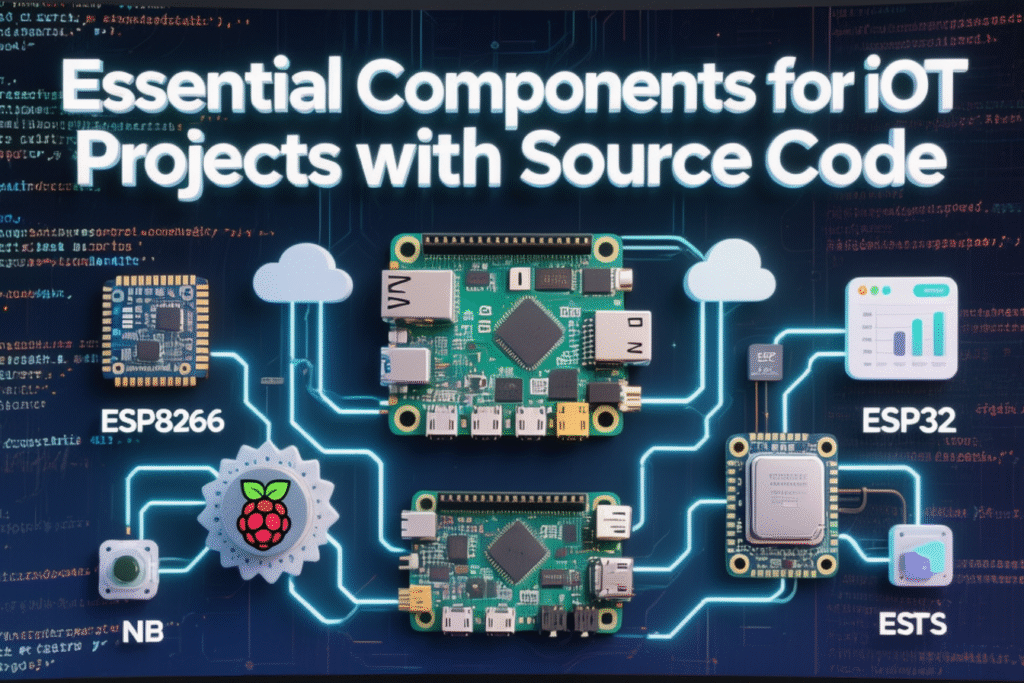
Before diving into specific IoT projects with source code, it’s important to understand the fundamental building blocks. Most IoT projects with source code utilize microcontrollers like Arduino, ESP8266, ESP32, or Raspberry Pi as their core processing units. These platforms are popular in IoT projects with source code because they’re affordable, well-documented, and have extensive community support.
Sensors form another critical component of IoT projects with source code. Temperature and humidity sensors (DHT11, DHT22), motion sensors (PIR), ultrasonic distance sensors, and gas sensors are commonly featured in IoT projects with source code. Communication modules like WiFi, Bluetooth, LoRa, and GSM enable these projects to connect to the internet or other devices, which is the essence of what makes IoT projects with source code truly “Internet of Things.”
Home Automation: Popular IoT Projects with Source Code
Home automation represents one of the most sought-after categories of IoT projects with source code. A smart home system that controls lights, fans, and appliances via a smartphone app is among the most popular IoT projects with source code for beginners. These IoT projects with source code typically use an ESP8266 or ESP32 microcontroller connected to relay modules that switch household appliances on and off.
The source code for these IoT projects with source code usually includes WiFi connectivity setup, web server implementation, and GPIO control logic. Many IoT projects with source code in this category integrate with platforms like Blynk, MQTT brokers, or custom mobile applications. By examining these IoT projects with source code, you’ll learn how to create intuitive user interfaces and implement secure remote control mechanisms.
Smart doorbell systems are another fascinating example of IoT projects with source code in home automation. These IoT projects with source code combine video streaming, motion detection, and push notifications to create comprehensive security solutions. The source code demonstrates integration with cloud services, real-time video processing, and user authentication systems.
Environmental Monitoring: Essential IoT Projects with Source Code
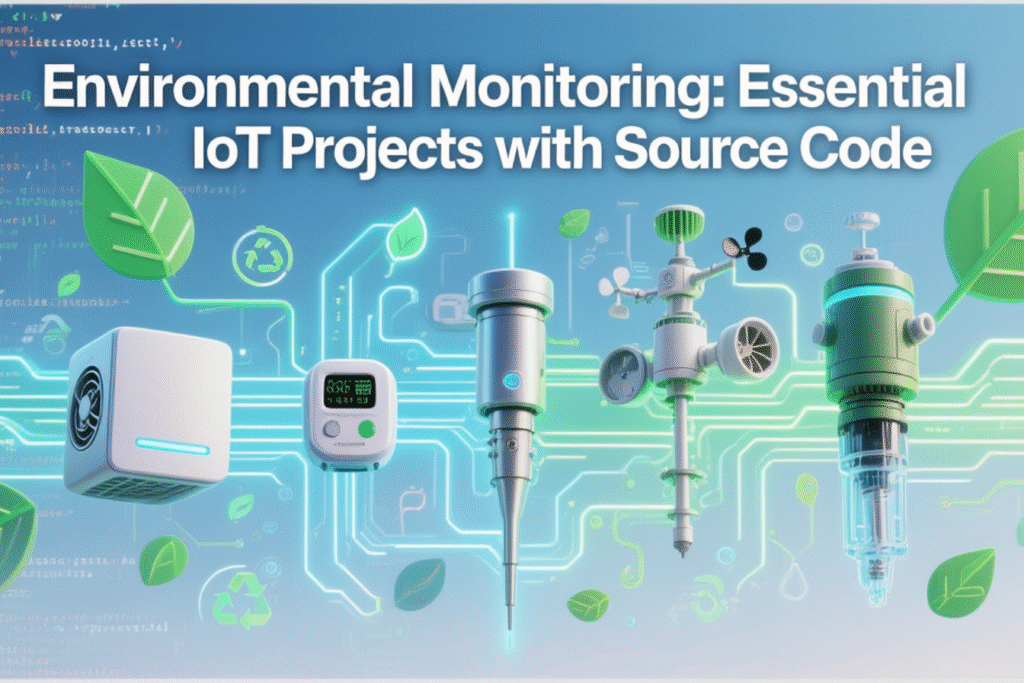
Environmental monitoring IoT projects with source code address growing concerns about air quality, weather patterns, and climate change. A weather station that measures temperature, humidity, pressure, and rainfall is a classic example of IoT projects with source code that provide practical value. These IoT projects with source code collect sensor data, process it using microcontrollers, and transmit it to cloud platforms for storage and visualization.
Air quality monitoring systems represent more advanced IoT projects with source code that detect harmful gases, particulate matter, and volatile organic compounds. The source code in these IoT projects with source code includes calibration algorithms, data averaging techniques, and threshold-based alert systems. By studying these IoT projects with source code, you’ll understand how to work with analog sensors and implement sophisticated data processing pipelines.
Soil moisture monitoring systems for agriculture are practical IoT projects with source code that help farmers optimize irrigation. These IoT projects with source code use capacitive or resistive soil moisture sensors connected to microcontrollers that trigger water pumps automatically. The source code demonstrates analog-to-digital conversion, decision-making logic, and actuator control, which are fundamental concepts in many IoT projects with source code.
Health and Wearables: Innovative IoT Projects with Source Code
Healthcare applications have spawned numerous IoT projects with source code that monitor vital signs and track fitness metrics. A heart rate monitoring system using a pulse sensor is one of the most educational IoT projects with source code in this category. These IoT projects with source code teach signal processing, filtering techniques, and real-time data visualization.
Fall detection systems for elderly care are critical IoT projects with source code that combine accelerometers, gyroscopes, and machine learning algorithms. The source code in these IoT projects with source code demonstrates how to detect sudden movements, analyze motion patterns, and trigger emergency alerts. Working with such IoT projects with source code provides insights into embedded machine learning and edge computing.
Medication reminder systems are practical IoT projects with source code that use RTC (Real-Time Clock) modules, buzzers, and LED indicators. These IoT projects with source code showcase scheduling algorithms, alarm management, and user interaction design. The simplicity of these IoT projects with source code makes them excellent starting points for beginners.

Industrial IoT: Advanced IoT Projects with Source Code
Industrial applications have driven demand for sophisticated IoT projects with source code that monitor machinery, track assets, and optimize processes. Predictive maintenance systems are among the most valuable IoT projects with source code in manufacturing. These IoT projects with source code use vibration sensors, temperature monitors, and current sensors to detect anomalies in equipment operation.
The source code for industrial IoT projects with source code often includes edge computing logic that performs initial data analysis before transmitting to the cloud. This approach, demonstrated in many IoT projects with source code, reduces bandwidth requirements and enables faster response times. By examining these IoT projects with source code, you’ll learn about industrial communication protocols like Modbus and OPC UA.
Asset tracking systems using GPS and LoRa technology are practical IoT projects with source code for logistics and supply chain management. These IoT projects with source code demonstrate low-power design techniques, geographic data handling, and long-range wireless communication. The source code in these IoT projects with source code provides templates for battery-powered devices that operate for months on a single charge.
Smart Agriculture: Sustainable IoT Projects with Source Code
Agriculture has benefited tremendously from IoT projects with source code that automate irrigation, monitor crop health, and optimize resource usage. Automated greenhouse control systems are comprehensive IoT projects with source code that regulate temperature, humidity, light, and ventilation. These IoT projects with source code implement PID control algorithms, multi-sensor integration, and actuator coordination.
Livestock monitoring systems are innovative IoT projects with source code that track animal health, location, and behavior patterns. The source code in these IoT projects with source code demonstrates GPS integration, activity recognition algorithms, and data aggregation techniques. Studying these IoT projects with source code reveals how to build robust outdoor systems that withstand harsh environmental conditions.
Hydroponic control systems represent advanced IoT projects with source code that manage nutrient delivery, pH levels, and water circulation. These IoT projects with source code combine multiple sensors, pumps, and control logic to create optimal growing conditions. The complexity of these IoT projects with source code makes them excellent learning resources for intermediate developers.
Smart City Applications: Impactful IoT Projects with Source Code
Urban infrastructure has inspired numerous IoT projects with source code that address parking, waste management, and traffic flow. Smart parking systems are popular IoT projects with source code that use ultrasonic or infrared sensors to detect vehicle presence. These IoT projects with source code typically include mobile apps, payment integration, and real-time availability updates.
Waste management systems are practical IoT projects with source code that monitor bin fill levels using ultrasonic distance sensors. The source code in these IoT projects with source code demonstrates threshold detection, route optimization algorithms, and notification systems. By building these IoT projects with source code, you’ll understand how IoT solutions can improve municipal services and reduce costs.
Street light automation systems are energy-saving IoT projects with source code that adjust lighting based on ambient conditions and motion detection. These IoT projects with source code showcase light sensors, PIR sensors, and PWM dimming techniques. The modular design of these IoT projects with source code makes them easy to replicate and scale.
Security and Surveillance: Protective IoT Projects with Source Code
Security applications have generated numerous IoT projects with source code that detect intrusions, monitor premises, and control access. Motion-activated camera systems are popular IoT projects with source code that combine PIR sensors with ESP32-CAM modules. These IoT projects with source code demonstrate image capture, WiFi transmission, and cloud storage integration.
RFID-based access control systems are essential IoT projects with source code for securing buildings and restricted areas. The source code in these IoT projects with source code includes RFID tag reading, database management, and access logging. Working with these IoT projects with source code teaches authentication mechanisms and security best practices.
Gas leak detection systems are critical safety-oriented IoT projects with source code that monitor for combustible and toxic gases. These IoT projects with source code use MQ series sensors, threshold detection, and multi-channel alert systems. The life-saving potential of these IoT projects with source code makes them particularly rewarding to build and deploy.

Energy Management: Efficient IoT Projects with Source Code
Power consumption monitoring has led to practical IoT projects with source code that help reduce energy costs. Smart energy meters are comprehensive IoT projects with source code that measure voltage, current, and power factor. These IoT projects with source code use current sensors like ACS712 or SCT-013 and implement complex calculations for accurate power measurement.
Solar panel monitoring systems are sustainable IoT projects with source code that track energy generation, battery status, and system efficiency. The source code in these IoT projects with source code demonstrates analog sensor interfacing, data logging, and performance analytics. By studying these IoT projects with source code, you’ll learn about renewable energy systems and optimization techniques.
Load scheduling systems are intelligent IoT projects with source code that automatically control appliances based on time-of-use pricing. These IoT projects with source code integrate with utility APIs, implement scheduling algorithms, and optimize power consumption. The sophistication of these IoT projects with source code demonstrates the potential of IoT in creating smart grids.
Getting Started with IoT Projects with Source Code
To begin working with IoT projects with source code, you’ll need a basic development environment. For Arduino-based IoT projects with source code, install the Arduino IDE and necessary board definitions. ESP8266 and ESP32 IoT projects with source code require additional core installations and library dependencies. Raspberry Pi IoT projects with source code typically use Python with libraries like GPIO Zero and MQTT clients.
Version control is essential when working with IoT projects with source code. Platforms like GitHub host thousands of IoT projects with source code that you can clone, study, and modify. Contributing to open-source IoT projects with source code helps you learn best practices, collaborate with other developers, and build your portfolio.
Documentation is crucial for successful IoT projects with source code. Well-documented IoT projects with source code include wiring diagrams, component lists, setup instructions, and troubleshooting guides. When creating your own IoT projects with source code, invest time in comprehensive documentation to help others learn from your work.
Best Practices for Working with IoT Projects with Source Code
Security should be a top priority when developing IoT projects with source code. Many publicly available IoT projects with source code include hardcoded credentials or lack encryption, which is fine for learning but dangerous in production. Study secure IoT projects with source code that implement SSL/TLS, token-based authentication, and secure boot mechanisms.
Power efficiency matters in battery-operated IoT projects with source code. Learn from IoT projects with source code that implement deep sleep modes, interrupt-driven architectures, and low-power communication protocols. Understanding power management through these IoT projects with source code is essential for creating practical, deployable solutions.
Scalability considerations appear in professional IoT projects with source code. Examine IoT projects with source code that use message queues, microservices architectures, and containerization. These advanced IoT projects with source code demonstrate how to build systems that handle thousands of devices and millions of data points.
Conclusion: Your Journey with IoT Projects with Source Code
Exploring IoT projects with source code opens doors to endless possibilities in connected device development. Whether you’re building simple sensor projects or complex automation systems, IoT projects with source code provide the foundation for learning, experimentation, and innovation. The hands-on experience gained from working with IoT projects with source code translates directly to valuable professional skills in this rapidly growing field.
Start with beginner-friendly IoT projects with source code to build confidence, then progressively tackle more complex challenges. Join communities that share IoT projects with source code, ask questions, and contribute your own creations. The collaborative nature of the IoT maker community ensures that high-quality IoT projects with source code continue to emerge, driving innovation and education forward.
Remember that every expert in IoT started by building simple IoT projects with source code and learning from failures. Don’t be discouraged by initial challenges; each bug fixed and sensor successfully integrated brings you closer to mastery. The future of connected devices is being built by people just like you, working through IoT projects with source code one line at a time.