

7 Best Private Search Engines in 2026
Writer & Blogger
Rahul Goswami
Share
Published on
Read Time
Approx 8 min
Quick Overview
Privacy has become a major concern for internet users as traditional search engines often collect personal data, track browsing habits, and build advertising profiles. Private search engines offer a secure alternative by allowing users to search the web without storing personal information, tracking search history, or selling data to advertisers.
The best private search engines prioritize user anonymity while still delivering relevant search results. Many also include encrypted connections, tracker blocking, anonymous browsing, and independent search indexes. Whether you’re concerned about online privacy, data security, or reducing targeted ads, choosing the right private search engine can significantly improve your browsing experience.
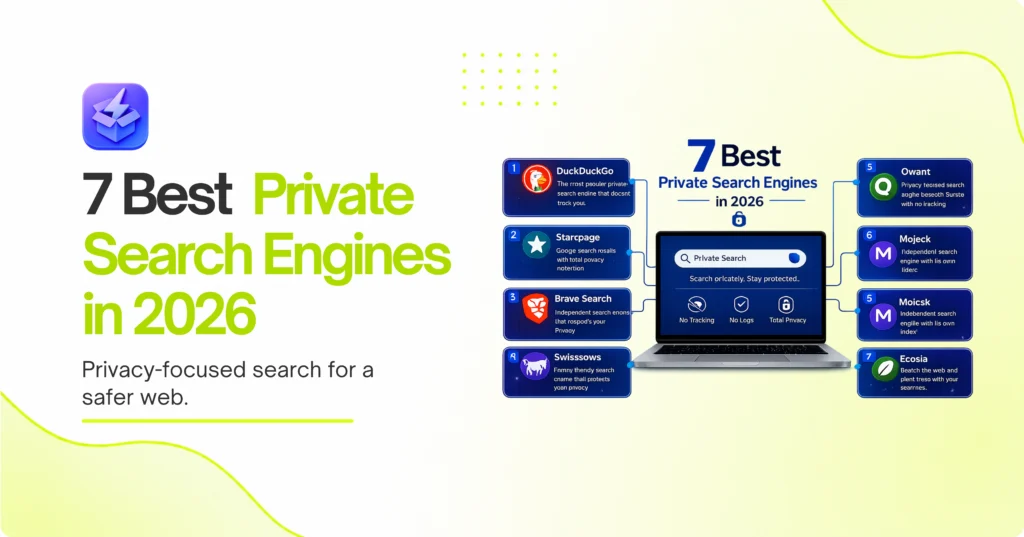
The best private search engine depends on your privacy needs and search preferences. DuckDuckGo is the best overall option, Startpage delivers Google-quality results without tracking, Brave Search uses an independent index, Swisscows focuses on family-friendly private searches, Qwant emphasizes European privacy standards, Mojeek offers its own web index, and Ecosia combines privacy with environmental sustainability.
In this guide, we’ll compare the best private search engines based on privacy features, search quality, speed, independent indexing, customization, and overall value.
Best Private Search Engines Compared
| Search Engine | Best For | Main Strength |
|---|---|---|
| DuckDuckGo | Overall privacy | No tracking |
| Startpage | Google results | Anonymous Google search |
| Brave Search | Independent search | Own search index |
| Swisscows | Families | Privacy-focused & family-friendly |
| Qwant | European users | GDPR-focused privacy |
| Mojeek | Independent indexing | Own web crawler |
| Ecosia | Eco-conscious users | Privacy with tree planting |
1. DuckDuckGo Is the Best Overall Private Search Engine
DuckDuckGo is one of the most popular privacy-focused search engines. It does not track users, store search history, or create advertising profiles. Instead, every user receives the same search results for the same query without personalized filtering.
The platform also includes tracker blocking, encrypted browsing, and privacy-focused browser extensions.
Key Features
- No user tracking
- Anonymous searching
- Tracker blocking
- Encrypted connections
- Browser extensions
- Privacy-focused browser
- Instant answers
Pros and Cons
DuckDuckGo offers an excellent balance of privacy and usability while maintaining fast search performance. However, search results may occasionally be less personalized than those from traditional search engines.
2. Startpage Delivers Google Search Results Privately
Startpage allows users to access Google search results without sharing personal information with Google. It removes identifying information before submitting searches, giving users Google’s search quality while maintaining anonymity.
The platform also offers Anonymous View, allowing users to visit websites without exposing their identity.
Key Features
- Google-powered results
- Anonymous browsing
- No search tracking
- Encrypted search
- Anonymous View
- Privacy protection
Pros and Cons
Startpage is ideal for users who want Google’s search quality without Google’s tracking. Some advanced Google features may not be available.
3. Brave Search Uses an Independent Search Index
Brave Search is built around its own independent search index rather than relying entirely on third-party providers. It focuses on delivering unbiased results while protecting user privacy.
Its integration with the Brave Browser provides additional privacy through built-in ad blocking and tracker protection.
Key Features
- Independent search index
- No tracking
- Anonymous searches
- AI-powered summaries
- Browser integration
- Privacy-first design
Pros and Cons
Brave Search offers strong privacy with increasing search quality. Some niche searches may still produce fewer results than larger search engines.
4. Swisscows Focuses on Privacy and Family Safety
Swisscows is a privacy-focused search engine based in Switzerland. It does not collect personal information or store user searches while automatically filtering explicit content, making it suitable for families and educational environments.
Key Features
- No user tracking
- Family-friendly search
- Secure data centers
- Semantic search
- Encrypted connections
- Privacy protection
Pros and Cons
Swisscows provides strong privacy and safe search features. Users seeking unrestricted search results may find automatic filtering limiting.
5. Qwant Prioritizes European Privacy Standards
Qwant is a European search engine that emphasizes user privacy and compliance with GDPR regulations. It does not track users or personalize search results based on browsing history.
The platform offers web, news, maps, shopping, and social media search capabilities.
Key Features
- GDPR compliance
- No tracking
- Private web search
- News search
- Shopping search
- Maps integration
Pros and Cons
Qwant is an excellent option for users seeking a European alternative to mainstream search engines. Search coverage may occasionally be less comprehensive outside Europe.
6. Mojeek Uses Its Own Search Index
Unlike many privacy search engines that rely on third-party indexes, Mojeek operates its own independent web crawler and search index.
This independence allows it to provide unbiased search results while maintaining strict privacy standards.
Key Features
- Independent search index
- No tracking
- Own web crawler
- Private searching
- Unbiased rankings
- Secure browsing
Pros and Cons
Mojeek is ideal for users seeking complete search independence. Since its index is smaller than larger competitors, some niche searches may return fewer results.
7. Ecosia Combines Privacy with Environmental Impact
Ecosia uses advertising revenue to fund global tree-planting initiatives while respecting user privacy. It encrypts searches, avoids creating permanent search profiles, and offers transparent privacy practices.
Users who want to support environmental sustainability without sacrificing privacy often choose Ecosia.
Key Features
- Privacy-focused search
- Tree planting program
- Encrypted searches
- No permanent search profiles
- Mobile apps
- Browser extensions
Pros and Cons
Ecosia is a strong choice for environmentally conscious users. While privacy protections are solid, its primary focus remains environmental impact alongside search functionality.
How to Choose the Best Private Search Engine
The best private search engine depends on your browsing habits and privacy priorities. Some users prioritize complete anonymity, while others want familiar search quality with minimal tracking.
Compare Important Features
Look for search engines that provide:
- No search tracking
- Anonymous browsing
- Independent search index
- Encrypted connections
- Tracker blocking
- Private browsing options
- Browser extensions
- Mobile compatibility
Consider Search Quality
Privacy is important, but search relevance also matters. If you rely on highly accurate search results, compare each platform’s indexing methods and overall search performance before switching completely.
Final Thought
Private search engines allow users to browse the web without sacrificing personal privacy. DuckDuckGo remains one of the best overall options because of its strong privacy protections and ease of use.
Startpage offers Google-quality results without tracking, Brave Search provides an independent search index, Swisscows delivers family-friendly privacy, Qwant emphasizes European data protection, Mojeek offers complete indexing independence, and Ecosia combines private searching with environmental sustainability.
Before choosing a private search engine, compare privacy policies, search quality, indexing methods, and additional security features. The right platform can help protect your personal information while delivering a safer and more private online experience.
FAQ
What is a private search engine?
A private search engine allows users to search the web without tracking search history, collecting personal information, or creating advertising profiles.
Which private search engine is the best?
DuckDuckGo is one of the best overall private search engines due to its strong privacy features, fast performance, and ease of use.
Do private search engines track users?
Most private search engines do not track users, store search history, or collect personally identifiable information.
Is Startpage better than Google for privacy?
Yes. Startpage provides Google search results while removing identifying information, allowing users to search more privately
Can private search engines replace Google?
Yes. Many private search engines offer comprehensive web search capabilities, although some specialized searches may still produce different results than Google.
What features should I look for in a private search engine?
Look for no-tracking policies, encrypted searches, independent indexing, anonymous browsing, tracker blocking, browser extensions, and transparent privacy practices.