

TL;DR
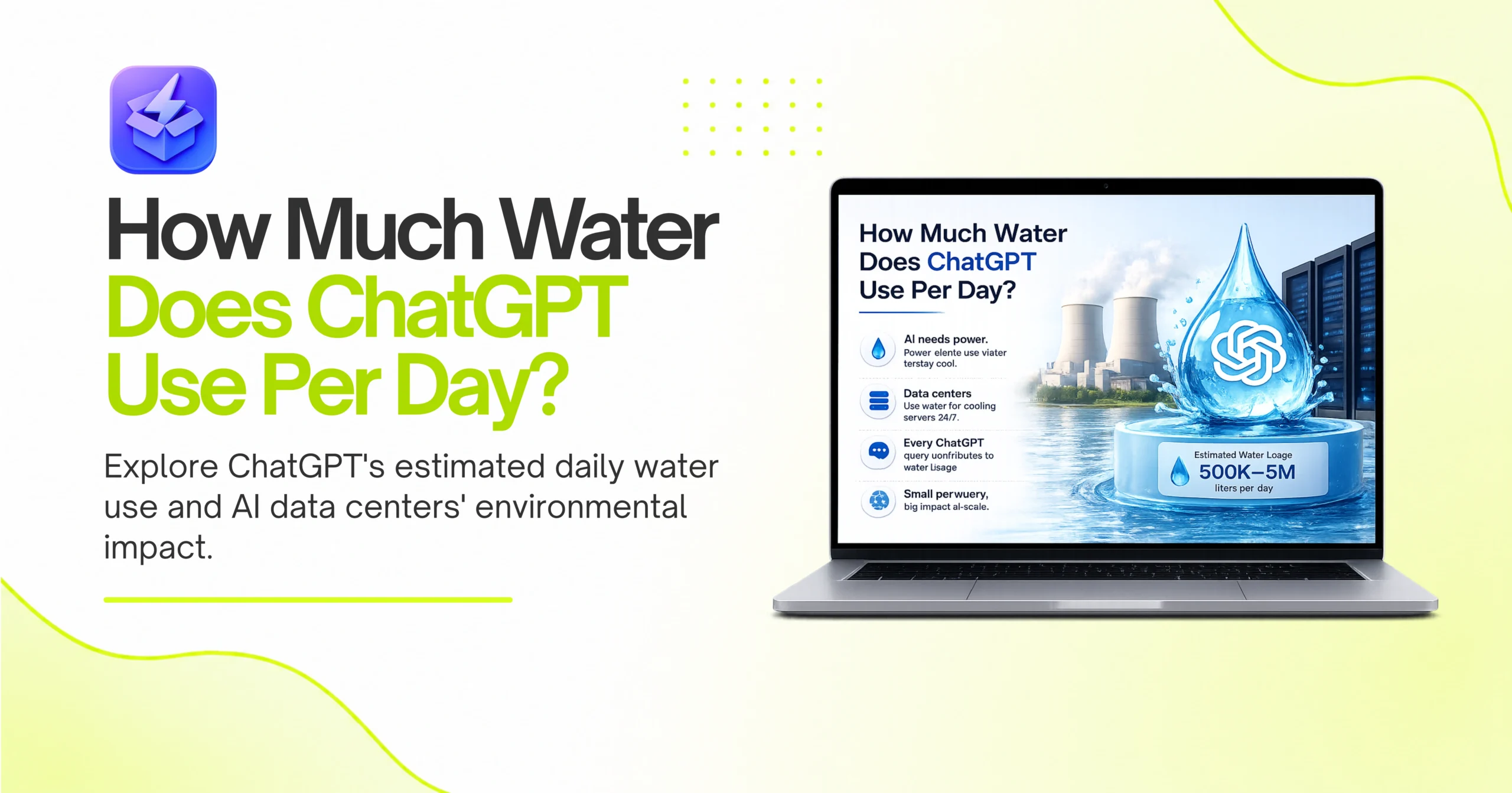
ChatGPT consumes roughly 500 milliliters of water for every 10 to 50 prompts, depending on the model and server location. Globally, estimates of how much water ChatGPT uses per day range into the hundreds of thousands of gallons. Data centers evaporate this water to cool the high-performance GPUs running the AI.
Key Takeaways
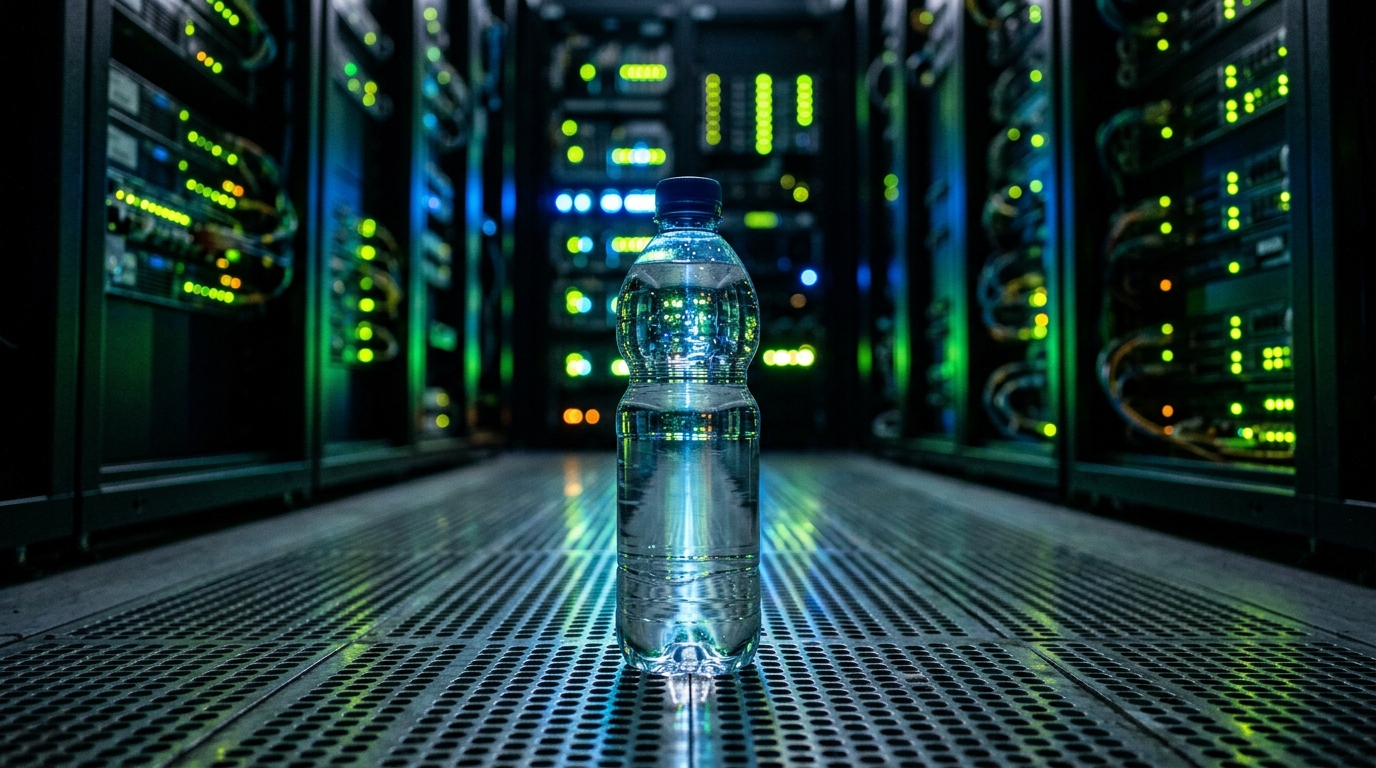
- ChatGPT uses a standard water bottle’s worth of water for every 10 to 50 user prompts.
- Total daily water usage likely exceeds several hundred thousand gallons across global data centers.
- AI models consume water in two distinct phases: initial training and daily user inference.
- Server location matters heavily, as data centers in hotter climates require significantly more cooling water.
Mark stood on the roof of a data center outside Des Moines, watching steam pour from massive cooling towers. His facility housed thousands of graphics processing units handling artificial intelligence requests, and the daily water draw had tripled in just six months. Every time someone asked a chatbot to write an email, those servers generated intense heat that only millions of gallons of water could manage. The environmental cost of artificial intelligence remains largely invisible to the end user sitting at a laptop. We simply type a question, and a polished answer appears seconds later. Behind that screen, massive infrastructure works overtime to keep the system running. Calculating exactly how much water does chatgpt use per day requires looking at server hardware, cooling efficiency, and massive query volume.
Exactly how much water does ChatGPT use per day?
Determining how much water does chatgpt use per day requires multiplying daily queries by the water cost per query. With an estimated 100 million active users generating billions of prompts, daily water consumption easily reaches hundreds of thousands of gallons. This figure fluctuates based on server load and outside temperature.
The mathematics of AI cooling
Researchers from UC Riverside and UT Arlington published a landmark study on the environmental footprint of artificial intelligence. Specifically, they found that ChatGPT needs about 500 milliliters of water for every 10 to 50 prompts. Consequently, scaling this metric up to the platform’s massive user base reveals a staggering daily volume. If users send one billion prompts a day, the system evaporates roughly 10 million liters of water. Therefore, understanding this scale is absolutely crucial for evaluating the true cost of generative AI platforms. Furthermore, older models like GPT-3 required millions of liters just during the initial training phase. Newer models like GPT-4 likely demand even more resources due to their vastly increased parameter counts and complexity. Ultimately, the math shows a clear link between digital convenience and physical resource depletion.
Training versus inference consumption
AI water use splits into two distinct categories: training and inference. Training is a one-time, massive expenditure of computing power and electricity. For instance, training GPT-3 in Microsoft’s state-of-the-art US data centers directly evaporated 700,000 liters of clean freshwater. Inference, on the other hand, represents the ongoing cost of answering user prompts every single day. Because millions of people use the tool daily, inference quickly surpasses training in its total water footprint. Consequently, the daily operational cost becomes the primary environmental concern for local municipalities. Meanwhile, companies continue to train even larger models in the background. As a result, the combined water demand of continuous training and daily inference creates unprecedented strain on data center infrastructure.
Why do AI models need so much water in the first place?
AI models run on dense clusters of graphics processing units that generate intense heat. Data centers pump water through cooling towers to absorb this heat and evaporate it into the atmosphere. Without this continuous water flow, the servers would overheat and fail within minutes.
Server racks and heat generation
Standard web hosting relies on central processing units, which run relatively cool under normal loads. Conversely, AI workloads require specialized graphics processing units, specifically models like the Nvidia A100 or H100. These chips draw massive amounts of electricity and convert almost all of it directly into heat. Therefore, maintaining safe operating temperatures is a constant, expensive battle for facility operators. A single server rack filled with AI chips can generate 30 to 40 kilowatts of heat. As a result, traditional air conditioning simply cannot keep up with this extreme thermal density. Facilities must rely on advanced liquid cooling solutions to prevent catastrophic hardware failure. Subsequently, the demand for high-density cooling systems has skyrocketed across the tech industry.
Evaporative cooling towers explained.
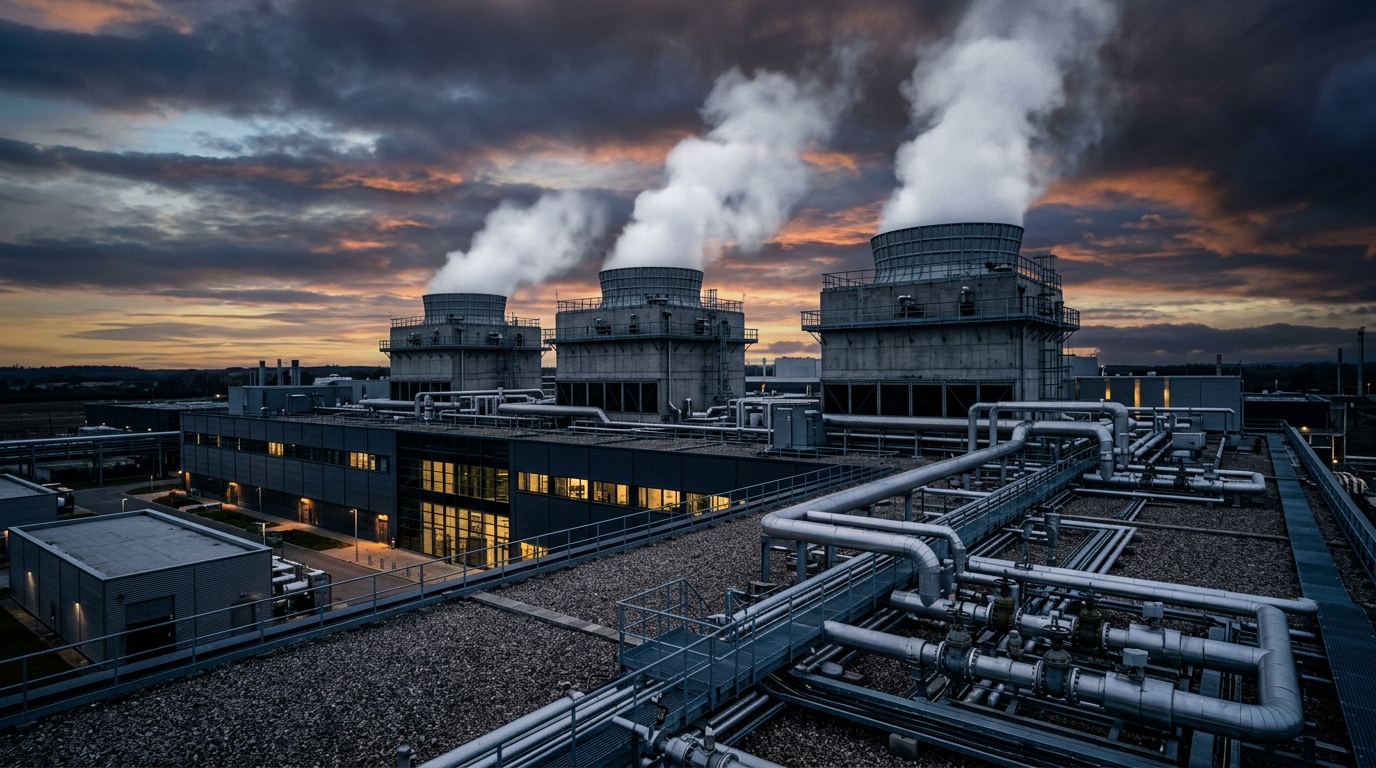
Most large data centers use evaporative cooling to manage extreme heat efficiently. Hot water from the server floor travels through pipes to large cooling towers located outside the building. Next, the system exposes this hot water to outside air, causing a portion of it to evaporate instantly. This phase change absorbs a massive amount of heat, cooling the remaining water before it returns to the servers. Unfortunately, this process consumes the water completely, meaning it never returns to the local watershed. Because of this, data centers require a continuous supply of fresh, potable water to replace what they lose to evaporation. Furthermore, using clean drinking water prevents mineral buildup inside the complex plumbing systems. Consequently, data centers directly compete with residents for municipal water supplies.
How do different AI engines compare in resource usage?
Different AI engines consume varying amounts of water based on their model size, hardware efficiency, and specific data center locations. Google and Microsoft operate distinct infrastructure networks, leading to different environmental footprints. Comparing these platforms helps users understand the resource intensity of their preferred AI tools.
OpenAI versus Google Gemini
OpenAI relies entirely on Microsoft Azure data centers to train and run its various models. Microsoft has previously pledged to become water-positive by 2030, meaning they plan to replenish more water than they consume. However, their recent sustainability reports show a sharp 34% increase in water usage, largely driven by AI expansion. Google, meanwhile, builds its own custom Tensor Processing Units to run models like Gemini. Google claims its proprietary chips are highly efficient, but the company also reported a 20% increase in water consumption last year. Both companies face the same fundamental physics: more computing power equals more heat. Ultimately, the exact water footprint depends heavily on where the specific query is processed and the outside temperature at that moment.
Comparing AI Productivity Tools
When evaluating SaaS for Business and AI Productivity software, the underlying infrastructure dictates the true water cost. Many smaller AI tools simply wrap OpenAI’s API, meaning their water usage ties directly back to Microsoft’s data centers. To clarify this landscape, we can look at a direct comparison of major AI engines and their typical infrastructure setups. This helps businesses evaluate the environmental impact of the software deals they choose to implement. Furthermore, grouping tools by their backend provider reveals massive dependencies on just a few major cloud networks. Consequently, diversifying your software stack does not always diversify your environmental footprint.
| AI Engine | Primary Infrastructure | Hardware Used | Estimated Water Cost per 50 Queries |
|---|---|---|---|
| ChatGPT (OpenAI) | Microsoft Azure | Nvidia GPUs | ~500 ml |
| Gemini (Google) | Google Cloud | Custom TPUs | ~400-500 ml |
| Claude (Anthropic) | AWS / Google Cloud | Mixed GPUs/TPUs | ~500 ml |
| Llama 3 (Meta) | Meta Data Centers | Nvidia GPUs | Varies by deployment |
Where are these data centers located, and why does geography matter?
Geography dictates a data center’s cooling efficiency and its direct impact on local water supplies. Facilities in cold climates can use natural outside air to cool servers, saving millions of gallons of water. Conversely, data centers in hot, arid regions must rely heavily on evaporative cooling, stressing local resources.
Regional water stress and server placement
The physical location of an AI server fundamentally changes its environmental impact on the surrounding community. For example, a data center located in Iowa uses significantly less water than an identical facility in Arizona. During the winter months, the Iowa facility can use free cooling by simply pulling in cold outside air. Meanwhile, the Arizona facility must run water-intensive evaporative cooling towers year-round just to survive the desert heat. Consequently, tech companies face growing pushback from communities located in water-stressed regions. When a single facility draws millions of gallons a month, it directly competes with local agriculture and residential needs. Therefore, calculating exactly how much water does chatgpt use per day requires looking closely at a map. Ultimately, a query routed to a server in a drought-stricken area causes far more environmental harm.
The shift toward colder climates
To mitigate these geographic issues, companies are increasingly building new data centers in colder northern regions. Facilities in Scandinavia or the Pacific Northwest benefit from naturally low ambient temperatures throughout the year. Furthermore, some operators are actively experimenting with underwater data centers, using the cold ocean as a massive, free heat sink. While these solutions drastically reduce freshwater consumption, they introduce entirely new logistical challenges for tech companies. Data must travel much further to reach end users, which inevitably increases network latency. Additionally, building in remote cold regions often requires laying massive new fiber-optic cables to handle the traffic. Despite these hurdles, the environmental pressure to abandon hot-climate data centers continues to grow rapidly.
What are tech companies doing to reduce AI water consumption?
Tech giants are investing heavily in closed-loop cooling systems, more efficient chip architectures, and advanced software optimization to reduce water use. These innovations aim to decouple AI growth from freshwater consumption. The goal is to build sustainable infrastructure that handles future demand without draining local aquifers.
Closed-loop cooling systems
The most promising mechanical solution to data center water consumption is closed-loop cooling technology. Unlike traditional evaporative towers, closed-loop systems do not expose the cooling water to the outside air at all. Instead, they continuously circulate the same water, using massive radiators and fans to dissipate the heat. While this method saves millions of gallons of water, it requires significantly more electricity to run the giant fans. Consequently, companies must carefully balance water conservation efforts against their carbon emission goals. Microsoft and Google are currently retrofitting several older facilities with this closed-loop technology. This transition is highly expensive and slow, but it represents the most viable path forward for sustainable AI growth.
Future hardware efficiency
Beyond mechanical cooling infrastructure, the actual computer hardware itself is becoming much more efficient. NVIDIA’s newest chips perform significantly more calculations per watt of electricity than any previous generations. Because they use less power for the same workload, they naturally generate less heat. Additionally, AI developers are finding clever ways to optimize their software models. Techniques like quantization and pruning allow complex models to run on smaller, less power-hungry hardware setups. As a result, the water cost per query should slowly decrease over the next few years. However, the total volume of queries is growing so fast that overall water consumption continues to rise regardless. We track these efficiency gains closely in our AI infrastructure trends coverage.