7 Best Rank Tracking Software for SEO Success
Writer & Blogger
Rahul Goswami
Share
Published on
Read Time
Approx 8 min
Rank tracking software helps SEO professionals and businesses monitor how their web pages perform in search engine results for specific keywords. Instead of manually checking Google rankings, these tools automatically track keyword positions, identify ranking changes, monitor competitors, and provide historical data that can help improve SEO strategies.
Modern rank tracking platforms offer more than simple position monitoring. Depending on the tool, users can track rankings by location and device, monitor competitors, analyze SERP features, identify ranking opportunities, and create reports for clients or internal teams.
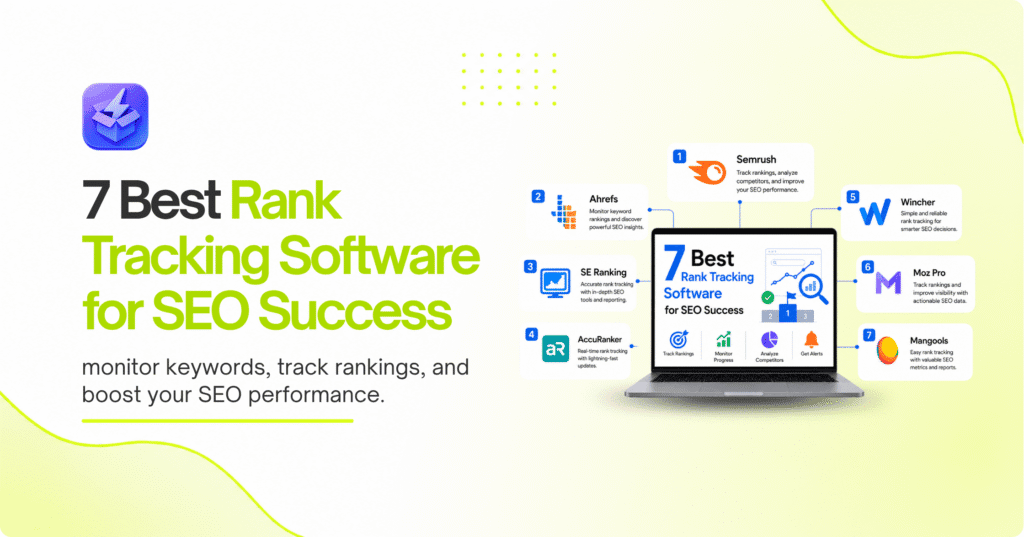
The best rank tracking software depends on the size of your website, number of keywords, reporting requirements, local SEO needs, and broader SEO workflow. Semrush is a strong all-in-one choice for businesses that need rank tracking alongside keyword research and competitor analysis. Ahrefs is useful for teams focused on organic search performance, while SE Ranking offers a balanced combination of rank tracking and SEO management features. AccuRanker focuses heavily on fast and accurate rank tracking, and Wincher provides a simpler approach for businesses that primarily need keyword monitoring. Moz Pro combines rank tracking with broader SEO tools, while Mangools is an approachable option for smaller teams and beginners.
In this guide, we compare seven of the best rank tracking software platforms based on keyword tracking, SERP monitoring, competitor analysis, local rankings, reporting, ease of use, and overall value.
Best Rank Tracking Software Compared
| Software | Best For | Main Strength |
|---|---|---|
| Semrush | All-in-one SEO | Comprehensive SEO and rank tracking |
| Ahrefs | SEO professionals | Organic search analysis |
| SE Ranking | Growing businesses | Flexible SEO platform |
| AccuRanker | Accurate rank tracking | Fast keyword monitoring |
| Wincher | Simple rank tracking | Easy-to-use tracking |
| Moz Pro | SEO teams | Rank tracking and SEO insights |
| Mangools | Beginners and small teams | Simple SEO workflow |
1. Semrush Is a Strong All-in-One Rank Tracker
Semrush is a comprehensive SEO platform that includes keyword rank tracking alongside keyword research, competitor analysis, site auditing, backlink analysis, and other SEO capabilities.
Its Position Tracking tool allows users to monitor keyword rankings and understand how search visibility changes over time. Businesses can track their own performance and compare rankings with competitors, making it easier to identify areas where competitors are gaining visibility.
One of Semrush’s biggest advantages is that rank tracking is part of a much broader SEO ecosystem. Instead of using one tool to monitor rankings and another to research keywords, users can connect ranking data with other SEO activities.
This makes Semrush particularly useful for agencies and in-house SEO teams managing multiple campaigns.
Key Features of Semrush
Semrush provides:
- Daily keyword rank tracking
- Competitor position monitoring
- Local and mobile tracking
- SERP feature tracking
- Historical ranking data
- Keyword research
- Competitor analysis
- SEO reporting
- Site auditing
Pros and Cons of Semrush
Pros
- Comprehensive SEO platform
- Strong competitor analysis
- Detailed keyword tracking
- Local and device-based tracking
- Useful reporting capabilities
- Large range of SEO tools
Cons
- Can be overwhelming for beginners
- Advanced features may require higher plans
- More expensive than dedicated basic rank trackers
Semrush is best for businesses and SEO professionals who want rank tracking as part of a complete SEO workflow.
2. Ahrefs Provides Detailed Organic Search Insights
Ahrefs is another widely used SEO platform that combines rank tracking with keyword research, backlink analysis, competitor research, and site auditing.
Its rank tracking capabilities allow users to monitor keyword positions over time and evaluate changes in organic search performance. SEO professionals can use this information to identify successful pages, declining rankings, and opportunities for improvement.
Ahrefs is particularly valuable when rank tracking needs to be combined with broader organic search analysis. For example, a marketer can identify a keyword where a page has lost visibility and then investigate competitors, backlinks, and related search opportunities.
The platform is therefore more than a simple position tracker. It provides a broader environment for analyzing how websites compete in organic search.
Key Features of Ahrefs
- Keyword rank tracking
- Competitor monitoring
- Keyword research
- Backlink analysis
- SERP analysis
- Site auditing
- Historical SEO data
- SEO reporting
Pros and Cons of Ahrefs
Pros
- Strong organic search analysis
- Excellent keyword research
- Extensive backlink data
- Useful competitor research
- Suitable for professional SEO teams
Cons
- Can take time to learn
- Advanced features may be unnecessary for basic rank tracking
- Costs can be significant for larger requirements
Ahrefs is a strong choice for SEO professionals who want ranking data alongside deeper organic search research.
3. SE Ranking Balances Rank Tracking and SEO Tools
SE Ranking is an SEO platform that places significant emphasis on keyword rank tracking while also providing tools for competitor analysis, website auditing, keyword research, and backlink management.
The platform allows businesses to monitor keyword positions and evaluate ranking changes over time. Users can also track rankings based on search locations and other parameters, making it useful for businesses targeting specific geographic markets.
One of SE Ranking’s advantages is its balance between functionality and usability. It provides enough features for professional SEO work without necessarily requiring users to navigate an extremely complex enterprise platform.
Agencies can also use its reporting and project management capabilities to manage multiple websites and SEO campaigns.
Key Features of SE Ranking
- Keyword position tracking
- Competitor research
- Website audits
- Keyword research
- Backlink monitoring
- Local SEO tracking
- SEO reports
- Multiple project management
Pros and Cons of SE Ranking
Pros
- Strong rank tracking
- Broad SEO feature set
- Useful competitor analysis
- Suitable for agencies
- User-friendly interface
Cons
- Some advanced features require additional configuration
- Large SEO platforms can take time to learn
- Feature availability depends on the selected plan
SE Ranking is a good option for businesses that want dedicated rank tracking combined with other essential SEO tools.
4. AccuRanker Focuses on Fast Rank Tracking
AccuRanker is designed primarily around keyword rank tracking. Unlike broader SEO platforms, it focuses heavily on helping users monitor search engine positions quickly and accurately.
This specialized approach can be useful for agencies and SEO professionals that already have separate tools for keyword research, backlinks, and technical SEO but need a dedicated ranking platform.
AccuRanker supports tracking across different search engines, locations, devices, and SERP features. This allows businesses to understand how rankings change across different search environments.
Its reporting capabilities are also useful for agencies that need to communicate ranking performance to clients.
Key Features of AccuRanker
- Keyword rank tracking
- Local rank tracking
- Desktop and mobile tracking
- SERP feature monitoring
- Competitor tracking
- Historical ranking data
- Reporting
- Data integrations
Pros and Cons of AccuRanker
Pros
- Dedicated rank tracking
- Fast ranking data
- Strong reporting
- Detailed keyword monitoring
- Useful for agencies
Cons
- Does not provide the same breadth of tools as an all-in-one SEO platform
- Businesses may need additional SEO software
- Can be more specialized than beginners require
AccuRanker is best for users who want a dedicated rank tracking platform rather than a complete SEO suite.
5. Wincher Makes Keyword Tracking Simple
Wincher focuses on making keyword rank tracking straightforward for businesses and SEO teams. Its interface is designed around monitoring search positions without overwhelming users with unnecessary complexity.
Users can track keywords, monitor competitors, review ranking changes, and generate reports. This makes Wincher useful for businesses that primarily need to know whether their SEO efforts are improving search visibility.
The platform can be especially useful for small businesses and marketers that do not require the extensive collection of tools offered by larger SEO suites.
Key Features of Wincher
- Keyword rank tracking
- Competitor tracking
- Ranking history
- Local SEO tracking
- Keyword grouping
- SEO reporting
- Search visibility monitoring
Pros and Cons of Wincher
Pros
- Simple interface
- Focused on rank tracking
- Easy to understand
- Useful reporting
- Suitable for small businesses
Cons
- Fewer advanced SEO tools than large platforms
- Less suitable for complex SEO workflows
- Businesses may need separate tools for technical SEO and backlink research
Wincher is a practical option when the primary goal is simple and accessible keyword position monitoring.
6. Moz Pro Combines Rank Tracking With SEO Insights
Moz Pro is an established SEO platform that includes rank tracking as part of a wider collection of SEO tools. Its Rank Tracking capabilities allow users to monitor keyword positions and understand how search visibility changes.
The platform can help SEO teams evaluate keyword performance, discover ranking opportunities, and compare their visibility against competitors.
Moz Pro is also useful for organizations that want to combine ranking information with keyword research, site audits, link analysis, and other SEO activities.
Its established SEO ecosystem makes it suitable for businesses that want a broader platform instead of a standalone rank tracker.
Key Features of Moz Pro
- Keyword rank tracking
- Competitor analysis
- Keyword research
- Site auditing
- Link analysis
- SERP analysis
- Ranking history
- SEO reporting
Pros and Cons of Moz Pro
Pros
- Established SEO platform
- Strong keyword research
- Useful rank tracking
- Competitor insights
- Multiple SEO tools
Cons
- Some features can require learning
- Not focused exclusively on rank tracking
- Advanced requirements may require higher plans
Moz Pro is a strong choice for teams that want ranking data within a broader SEO toolkit.
7. Mangools Is Beginner-Friendly for Rank Tracking
Mangools is an SEO software suite designed with simplicity in mind. Its tools cover keyword research, SERP analysis, backlink analysis, and rank tracking.
The Rank Tracker allows users to monitor keyword positions and observe changes over time. Its straightforward interface can make it easier for beginners to understand ranking performance without navigating a complicated enterprise SEO platform.
Mangools can be particularly useful for freelancers, bloggers, small businesses, and marketers who need essential SEO functionality without an extensive learning curve.
Key Features of Mangools
- Keyword rank tracking
- Keyword research
- SERP analysis
- Backlink analysis
- Competitor research
- Ranking history
- Simple reporting
Pros and Cons of Mangools
Pros
- Beginner-friendly
- Simple interface
- Useful SEO fundamentals
- Easy keyword tracking
- Suitable for small teams
Cons
- Fewer advanced features than enterprise SEO platforms
- Less suitable for complex SEO campaigns
- Reporting capabilities may be more limited than specialized platforms
Mangools is a good choice for beginners and small businesses that want an uncomplicated way to monitor keyword rankings.
How to Choose the Best Rank Tracking Software
The best rank tracking software depends on how many keywords you need to monitor, how frequently rankings should be updated, which locations you target, and whether you need additional SEO capabilities.
If you want an all-in-one SEO platform, Semrush or Ahrefs can provide ranking data alongside keyword research, competitor analysis, backlinks, and technical SEO tools. SE Ranking offers a balanced alternative for businesses and agencies.
If ranking accuracy and dedicated tracking are your main priorities, AccuRanker may be more appropriate. Wincher is useful for simpler keyword monitoring, while Moz Pro and Mangools can provide ranking features as part of broader SEO workflows.
Compare Tracking and Reporting Features
Before selecting a platform, consider:
- Number of keywords supported
- Tracking frequency
- Desktop and mobile rankings
- Local search tracking
- Competitor monitoring
- SERP feature tracking
- Historical data
- Reporting
- Data exports
- Integrations
Accurate location tracking is particularly important for local businesses. A keyword can have very different rankings depending on the city, country, device, or search environment being measured.
Consider Your SEO Workflow and Budget
Rank tracking should fit naturally into your broader SEO workflow. If you already use separate tools for keyword research and backlink analysis, a dedicated tracker may be enough.
On the other hand, an all-in-one platform can be more convenient if you want keyword research, site audits, competitor analysis, backlinks, and ranking data in one place.
Also consider how your requirements will change as your website grows. A tool that works well for a small website may become restrictive when you need to monitor thousands of keywords across multiple countries and competitors.
Final Thought
The best rank tracking software should make it easier to understand whether your SEO strategy is improving organic search visibility. Semrush is a strong all-in-one choice for businesses that need comprehensive SEO capabilities, while Ahrefs is particularly useful for teams focused on organic search analysis.
SE Ranking offers a balanced combination of rank tracking and broader SEO tools. AccuRanker is a strong option for users who want dedicated keyword monitoring, while Wincher focuses on keeping rank tracking simple and accessible. Moz Pro combines rankings with established SEO capabilities, and Mangools is a practical option for beginners and smaller teams.
There is no single best rank tracker for every website. The right platform depends on the number of keywords you monitor, target locations, reporting requirements, competitors, SEO expertise, and budget.
Before choosing a subscription, test the software with keywords that actually matter to your business. Check how accurately it reports your rankings, how quickly you can understand changes, how useful its competitor data is, and whether its reports provide information you can act on.
A good rank tracker should not simply tell you that a keyword moved from position 8 to position 12. It should help you understand why visibility changed and what you should do next.
FAQ
What is rank tracking software?
Rank tracking software monitors the positions of webpages for specific keywords in search engine results. It can track ranking changes over time and provide information about competitors, locations, devices, and SERP features.
Which is the best rank tracking software?
The best option depends on your requirements. Semrush is a strong all-in-one choice, Ahrefs is useful for organic search analysis, AccuRanker focuses on dedicated rank tracking, and Mangools is suitable for beginners.
How often should keyword rankings be tracked?
The ideal frequency depends on the website and SEO campaign. Regular tracking helps identify significant ranking changes and measure the impact of SEO work. Businesses with competitive or frequently changing search results may benefit from more frequent monitoring.
Can rank tracking software monitor local SEO rankings?
Yes. Many rank tracking platforms support location-based tracking, allowing businesses to monitor keyword positions in specific cities, regions, or countries.
Can rank trackers monitor competitors?
Yes. Many rank tracking tools allow users to compare their keyword positions with competitors. This can help identify keywords where competitors are gaining visibility or where your website has an opportunity to improve.
Is rank tracking enough for SEO?
No. Rank tracking is only one part of SEO. Effective SEO also involves keyword research, content optimization, technical SEO, backlinks, user experience, and performance analysis. Rank tracking helps measure the results of those activities.