How to Choose Affordable CRM Software for Nonprofits
Let’s be honest: running a non-profit often feels like trying to build a plane while it’s already in the air. You’re juggling donor relations, volunteer sc…

Let’s be honest: running a non-profit often feels like trying to build a plane while it’s already in the air. You’re juggling donor relations, volunteer sc…
You’re staring at a blank Google Doc, and the cursor is mocking you. It’s blinking at a steady, rhythmic pace, reminding you that you have three articles d…
Let’s be honest: your agency’s monthly subscription bill is probably looking a bit bloated. If you’re shelling out $500 or more every month for a single SE…
Let’s be brutally honest: your agency’s profit margins are probably getting squeezed. Between rising labor costs and the “big tool” tax, it feels like you’…
Let’s be honest: your browser tabs are probably a graveyard of SaaS tools you “meant to try” but couldn’t justify the $99/month price tag for. We’ve all be…
Is your company’s bank statement looking like a graveyard of forgotten software trials? You aren’t alone; the average mid-sized business now juggles over 2…
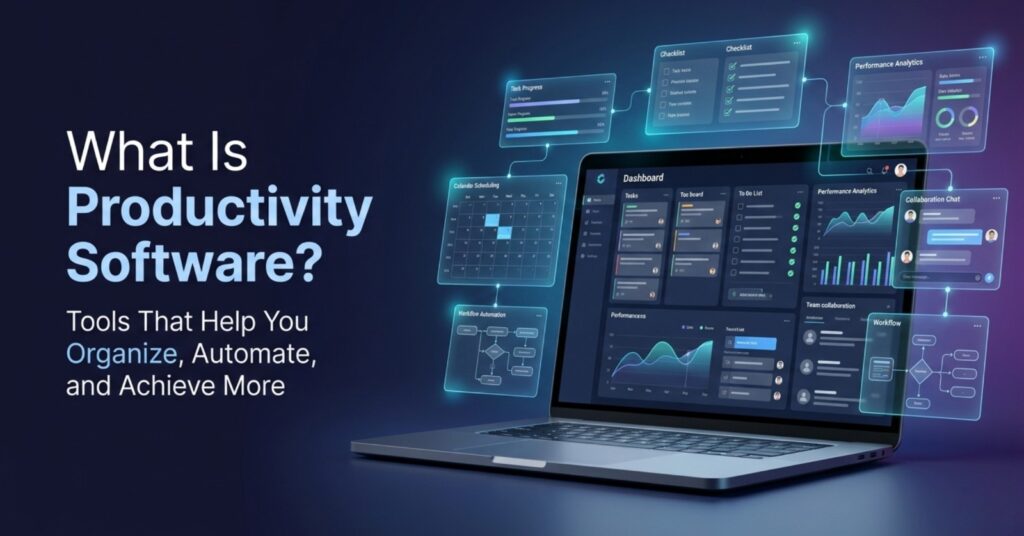
Computer programs known as productivity software assist users in creating documents, data collections, informational images, numerical tables, and slide presentations. People can do their work activities more easily thanks to these programs. Occasionally, productivity software also includes applications that let users communicate and work in an organized manner. Productivity software often makes it easier for people to finish their tasks. In this article, we will get to know what is productivity software? Using Software for Productivity There are several key uses for productivity software: Software Tool Examples for Productivity Office from Microsoft Microsoft Office is a collection of programs that includes Word for composing documents, Excel for dealing with figures and data to do calculations, PowerPoint for creating slideshow presentations, OneNote for collecting notes, Outlook for emails, and Publisher for publications. Workspace on Google A suite of programs called Google Workspace includes Google Docs for writing, Google Sheets for working with data and tables, Google Slides for creating slide shows, and Google Forms for creating or generating forms. iWork from Apple A collection of software that is developed by Apple is known as Apple iWork. These are the Keynote to compose slide shows, Numbers to deal with numbers or data tables, and Pages to compose papers. OpenOffice Apache Apache OpenOffice is a collection of free software comprising Writer to write documents, Calc to operate numbers and tables, Impress to produce slide shows, Draw to produce images and graphics, as well as Base to handle databases. What are the most important factors to take into account while selecting productivity software? Benefits The key benefit of the productivity software is that it simplifies the work and increases productivity through the saving of time and effort. Drawbacks The following are some possible drawbacks of utilizing productivity software: The primary drawbacks include becoming overly reliant on having the technology available, possibly requiring additional assistance to use the programs, and certain productivity apps being challenging to learn at first. Conclusion Computer tools called productivity software help people work more productively and efficiently. These computer programs help people to make slide shows, work with data and figures, make documents, and perform other tasks. They are Google applications, Microsoft Office, and free software, among others. Productivity software simplifies work life since it assists individuals in achieving their work faster and more productively. More can be achieved in less time with the help of effective productivity strategies by teams and individuals alike. You can also read our article: How to Classify Software Applications Components

Software can be classified on the basis of its application, platform, deployment method, licensing, development model, size, and interface. Common software categories include system and application software, native and cross-platform software, installed and cloud software, proprietary and open-source software, traditional and agile software, small-scale and enterprise software, and GUI or CLI software. These categories assist in choosing the appropriate software for particular requirements. In this post, we will find out how to classify software applications components. Depending on the Application System Software Provides a framework for executing applications and controlling computer hardware. It includes device drivers, operating systems, compilers, and editors, which are all required for the computer to function. Compilers translate high-level languages into machine code, and operating systems provide a bridge between software and hardware. Application Software Developed to directly engage with users in order to satisfy their needs. Generic software and customized software are the two categories under which it falls. While customized software is created especially to satisfy a client’s particular needs and is not meant for broad use, generic software is accessible to all users and offers standard functionality. Networking and Web Applications Software Facilitates computer-to-computer communication and provides network access to shared resources and data. Network management tools, server software, security and encryption software, and web development technologies like HTML, PHP, and XML are all utilized in network-based settings like the World Wide Web. Embedded Software Integrated into hardware, typically kept in Read-Only Memory (ROM), and responsible for controlling particular system operations. It is frequently found in gadgets like satellites, microwaves, washing machines, and other instrumentation and control systems. Business Software The most popular type of software, this category supports business applications. Software for accounting, banking, hospitals, schools, financial markets, and inventory management are a few examples. Entertainment Software For educational organizations, particularly those that work with young children, education and entertainment software offers a potent weapon. Software for enjoyment comes in many forms, including computer games, instructional games, mapping software, and translation software. Artificial Intelligence Software This category includes programs such as artificial neural networks, expert systems, decision support systems, and pattern recognition software. They deal with intricate issues that are unaffected by intricate calculations made with non-numerical algorithms. Scientific Software To accomplish enterprise-specific activities, scientific and engineering software meets the needs of its users. Using industry-specific concepts, methods, and formulas, such software is created for particular uses. Software such as MATLAB, AUTOCAD, PSPICE, ORCAD, and others are examples. Utility Software The applications in this category carry out particular functions and differ from other software in terms of complexity, size, and cost. Examples include speech recognition software, antivirus software, compression software, and more. Document Management Software Reduce paperwork by storing, monitoring, and managing documents digitally. It facilitates effective document indexing and retrieval, security, version control, and history tracking. Considering Copyright Commercial Software Offered by software firms under a license that permits customers to utilize the product but prohibits copying or altering it. The business still owns the software’s copyright. Shareware Software Software that is free to copy and distribute for non-commercial uses is known as freeware. Generally speaking, changes, derivative works, and even decompiling are allowed without obtaining consent from the copyright holder. Freeware Software This type of software is protected by copyright and permits users to share and copy it for testing purposes. Modifications are not allowed, and users who continue to use the software after evaluation must pay for it. Public Domain Software Since the proprietor relinquishes all rights, there are no copyright limitations. There are no restrictions on users’ ability to distribute, alter, reverse-engineer, or duplicate the software. Conclusion Finally, understanding how to categorize software components is very significant in creating systems that are easy to understand and work with. Software components are normally categorized depending on what they do, what they are responsible for, and how they relate to each other in the system. When programmers ensure that components such as the user interface, business logic, and data access components are separated, it becomes easy to maintain and improve the software. Categorizing things properly also ensures that the system functions properly and is safe. Every component has a role to play, which simplifies things and eliminates unnecessary connections. Therefore, problem-solving becomes easy, and modifications can be done smoothly. However, testing remains organized. When software components are properly categorized, they assist in making software more modular, reusable, and maintainable. Also, modern ways of developing software encourage using parts to build systems. Whether you use systems, small services, or modular design grouping software parts makes the system design clear. Companies benefit from spending money on development and getting things done faster. In the end, learning how to group software parts is not an idea but a real way to make software that is strong, flexible, and ready for the future. A good way of grouping things lays the foundation for software to succeed and grow in the long term.
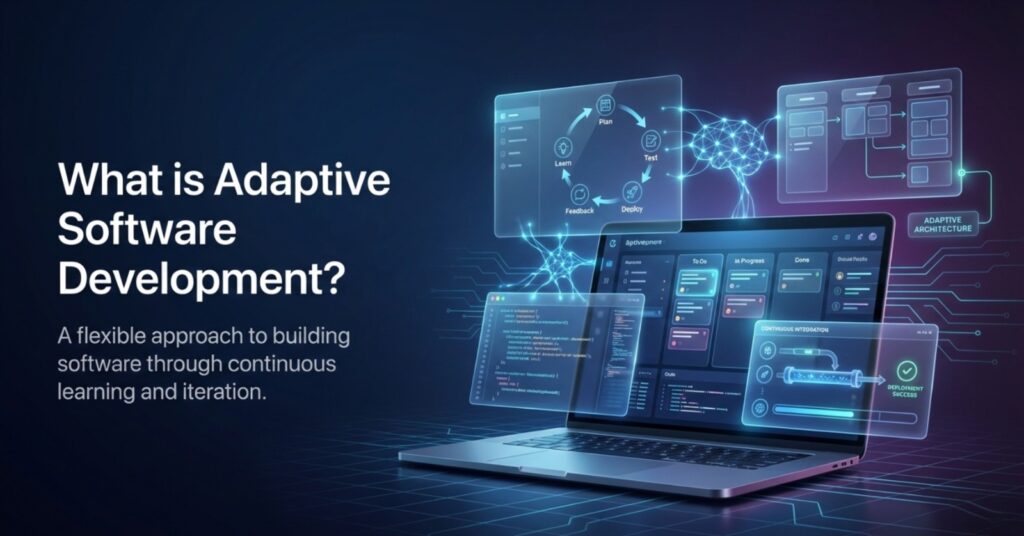
In today’ss moving digital world, businesses are always facing change. Customer demands keep changing. Market competition is growing every day. However, Technology is developing at a rate that has never been observed before. Most organizations are faced with the question, “What is Adaptive Software Development?” in such a situation. Adaptive Software Development (ASD)is an agile approach to software development. However, instead of relying on strict planning and fixed requirements, ASD encourages teams to keep adapting. Additionally, it focuses on working, managing risks, and learning continuously. This approach is especially useful for projects where requirementsre not clear at the start. Moreover, Companies that operate in changing markets often choose Adaptive Software Development because it supports ideas and quick changes. Understanding Adaptive Software Development Moreover, to understand what Adaptive Software Development is, it helps to compare it withother methods. Older models like Waterfall rely heavily on planning at the beginning. Teams define requirements at the start. Making changes later can cause delays and extra costs. Adaptive Software Development takes a path. It assumes that change is going to happen. Moreover, in resisting uncertainty, ASD embraces it. This methodology allows teams to adjust plans, refine features nd improve results throughout the project. ASD was introduced by Jim Highsmith in the 1990s. He designed this methodology to manage software systems where it was hard to predict what would happen. His goal was to create a framework that works well in various conditions. Core Phases of Adaptive Software Development When explaining Adaptive Software Development, its three core phases are essential: Speculate When making a fixed long-term plan, teams make an initial guess about project goals. This plan is a starting point. Is flexible. Additionally, Teams establishes high-level goals, risks, and priorities based on business value. The speculative phase lays the foundation without committing the project to a structure. Collaborate Teamwork is involved in adaptive software development. Moreover, there is a collaboration between the customers, testers, stakeholders, and developers at all levels of the process. Communication is always ongoing. Comments are welcome. It takes a shorter time to make decisions since everybody is involved. Collaboration helps in avoiding miscommunication. empowers products to be as good as the users expect. Learn Learning is a part of ASD. It is embedded in every cycle. However, after every cycle of development, performance is checked, data is examined, errors are identified, and improvement plans are developed. Learnings from one cycle are used in the other. This continual learning process increases the quality of the product as time goes by. Key Features of Adaptive Software Development The most appropriate way to understand what Adaptive Software Development is, is to figure out what it is defined by. Additionally, these are the features that distinguish ASD from other software development models. Iterative and Incremental Development Adaptive Software Development: In this one, the project is divided into an iterative or a cyclic process. With every cycle, a developmental software version is generated. Additionally, the development team offers early functionality rather than waiting for the final version. The software evolves gradually. This approach catches bugs early and prevents large-scale failure. swiftly puts changes into practice. Continuous Customer Feedback People who use the product are involved in the Adaptive Software Development process. However, the users give their thoughts and ideas during every stage of making the product. What the users say affects the changes that are made, and the things that are needed can change based on how people use the product. Moreover, this section is quite significant as it ensures that the end product is designed depending on what the users require, not what people believed to be required in the first place. Risk-Driven Planning One of the features of Adaptive Software Development is its focus on managing risks. High-risk components are developed first. However, critical uncertainties are addressed early. However, this proactive approach minimizes failures and gives teams better control over complex systems. Flexibility in Requirements Requirements are not treated as documents; they are adaptable. If there are changes in market conditions, then the product direction can be adjusted accordingly. However, the priorities are changed by teams without affecting the structure. This is why Adaptive Software Development is most suitable for startups and innovation-driven companies. Strong Team Collaboration ASD encourages functional teamwork. Developers have interactions with designers, testers, and business stakeholders. Issues are resolved together. This promotes accountability. Productivity is improved because the decision is made with a common understanding. Learning-Oriented Culture Learning is really important for Adaptive Software Development. It is what causes it to work. Whenever the team is working on something, they go back and compare what they have done. Discuss the successes and failures. The team will always attempt to do things in a way that they continue to learn through their errors and what they do best. This way of working becomes a habit for the team. They get better and better at Adaptive Software Development over time because they keep learning, and Adaptive Software Development gets better. Adaptive Planning Planning in ASD is dynamic. When developing a rigid roadmap, teams refine strategies based on new learnings. Metrics of progress inform decisions, and feedback shapes priorities. This dynamic planning approach avoids working on assumptions. Emphasis on Innovation Adaptive Software Development encourages experimentation. This is because it encourages teams to experiment with new ideas. Innovation is encouraged since the process does not constrain creativity through documentation. This is ideal for organizations that wish to grow. Benefits of Adaptive Software Development Organizations can appreciate the benefits of Adaptive Software Development when they know what it entails: Real-World Example of Adaptive Software Development Imagine a startup developing a mobile application. Users’ preferences are unknown at launch. The app may take a long time to launch if a model is used because it may take months to complete all the features. The development of the adaptive software includes a quick application release, customer feedback, and further cycles. Challenges of Adaptive Software Development Even though ASD has benefits, there are some shortcomings. Teams
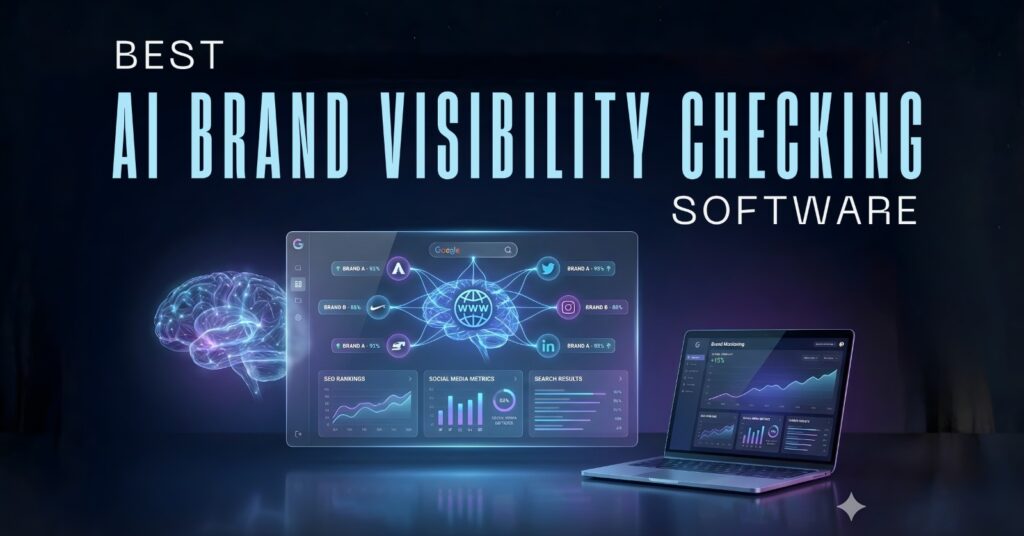
The best AI brand visibility checking software has become an essential tool for companies operating in the United States and Europe. Digital competition is increasing rapidly. Perception of brands is no longer created through traditional search engine rankings. Rather, it is affected by AI summaries, voice search results, media coverage, and social conversations. Because of this shift, the demand for the best AI brand visibility checking software is rising across industries. The US and European markets are known to have cutthroat competition in almost all sectors. Inconsistencies in visibility can result in lost profits. Chances of missed opportunities can arise when the visibility of brands is not measured correctly. It has therefore become a necessity to invest in the best AI brand visibility checking software. Why Brand Visibility Is More Complex Than Ever Search behavior has undergone a dramatic shift in the past few years. Answers generated by AI are now being shown above the organic results. Featured snippets are being given more importance than the normal results. Voice assistants are also having an impact on search behavior. Because of these changes, traditional SEO tracking methods are no longer sufficient. Keyword rankings alone do not represent true brand presence. A wider monitoring system needs to be put in place. This is where the best AI brand visibility check software comes into play. Brand visibility is now spread across various online interaction points. Brand mentions are found in blogs, forums, AI-powered responses, review sites, and trade publications. As a result, brand authority needs to be tracked not on a single platform but on an entire ecosystem. What Is AI Brand Visibility Checking Software? The best AI brand visibility check software is one that utilizes artificial intelligence to track, analyze, and provide information on how often and where the brand is visible on the internet. The information is gathered from search engines, AI-written content, news, social media, and online publications. Unlike traditional tools, AI-powered visibility platforms evaluate contextual presence. Entity recognition is applied to detect brand references even when exact keywords are not used. Sentiment analysis is conducted to determine whether mentions are positive or negative. As a result, a comprehensive visibility profile is created. Why US and European Businesses Need the Best AI Brand Visibility Checking Software The US market is highly saturated. European markets are fragmented but equally competitive. Multi-language environments exist across Europe. Regulatory frameworks such as GDPR must also be considered. Because of these factors, the best AI brand visibility checking software must provide regional accuracy and compliance. Local search behavior should be monitored. Language-based variations must be analyzed. Cross-border brand mentions should be tracked effectively. Moreover, market reputation can change quickly in these markets. Negative news has a rapid spread. Online conversations get amplified by AI-powered tools. Thus, monitoring is needed. Core Features of the Best AI Brand Visibility Checking Software When evaluating the best AI brand visibility checking software, several essential capabilities should be prioritized. Search engine results are scanned continuously. AI summaries are included in tracking reports. Featured snippets are monitored alongside traditional rankings. Mentions are identified using contextual analysis rather than exact keyword matching. As a result, hidden visibility signals are uncovered. Competitor exposure is analyzed simultaneously. Comparative dashboards are generated. Market positioning is visualized clearly. Data can be segmented by country, state, or city. US and European markets can be evaluated independently. Brand reputation is assessed automatically. Emotional tone is measured. Risk indicators are highlighted. Because these features are integrated into a unified dashboard, strategic decisions can be made efficiently. How the Best AI Brand Visibility Checking Software Supports Marketing Teams Marketing strategies are often built on incomplete data. However, when the best AI brand visibility checking software is implemented, clearer insights are provided. Content gaps are identified quickly. Underperforming markets are highlighted automatically. High-visibility content opportunities are discovered through AI trend forecasting. Additionally, PR performance can be measured accurately. Media coverage impact is quantified. Social engagement trends are correlated with brand mentions. Therefore, marketing investments can be optimized with confidence. The Role of AI in Visibility Forecasting Artificial intelligence does more than track current exposure. Predictive modeling is applied to anticipate future visibility trends. Pattern recognition algorithms are used to detect growth signals. With the best AI brand visibility checking software, forecast reports are generated based on historical data. Seasonal search variations are analyzed. Competitive shifts are predicted before they occur. As a result, businesses can respond proactively instead of reactively. Traditional SEO Tools vs Best AI Brand Visibility Checking Software Traditional SEO tools focus heavily on keyword rankings and backlinks. Traffic estimates are usually emphasized. Technical audits are often prioritized. In contrast, the best AI brand visibility checking software provides a broader digital footprint analysis. Brand authority is measured beyond keyword performance. AI citation presence is tracked. Moreover, conversational AI mentions are monitored. Entity authority is evaluated across digital platforms. Because of this expanded scope, a more realistic visibility score is generated. Compliance and Data Protection in the US and Europe Data regulations differ between regions. GDPR requirements apply across the European Union. Privacy frameworks are enforced strictly. Therefore, the best AI brand visibility checking software must comply with international standards. Data collection processes should be transparent. Secure storage protocols must be implemented. Failure to comply could result in legal consequences. Consequently, compliance should be verified before adoption. Benefits of Using the Best AI Brand Visibility Checking Software Several measurable advantages are delivered when AI-driven monitoring is implemented. Brand awareness can be quantified accurately. Competitive intelligence becomes more precise. Marketing ROI is calculated with greater clarity. Furthermore, reputation risks are detected early. Crisis management strategies are strengthened. Growth opportunities are identified based on real data. Because of these benefits, long-term digital expansion becomes more sustainable. Key Industries That Benefit Most SaaS companies experience rapid online competition. E-commerce brands face intense product visibility battles. Financial services operate under strict reputation scrutiny. Additionally, healthcare organizations require credibility monitoring. Technology startups must track emerging brand mentions. Enterprise corporations demand multi-region visibility insights. For