topsoftwareoffers.com

Uncategorized

budget software for business
Uncategorized

Budget Software for Business: A Full Guide to Implementing

Budget Software for Business: Smart, Cheap Tools for Growth That Lasts Businesses don’t need to blow a ton of cash on software to do well these days. With so many budget software for business options now, businesses of all sizes can get the tools they need without going broke. If you’re a startup, small business, freelancer, or just trying to grow, you can use cheaper software to handle things, get more done, and grow without stressing about money Budget software gives you the key stuff you need without the big price tag. It can assist with things you do on a daily basis, such as accounting, tracking customers, marketing, communicating with people, organizing projects, setting things to happen automatically, and tracking data. Rather than breaking the bank on expensive solutions, you can choose and choose software that is gentle on your wallet but still gets the job done Why Budget Software Matters Now Running a business means always paying for stuff. You’ve got rent, salaries, marketing, tools, and keeping things running – it all adds up. Pricey software just makes things harder and can stop you from growing. That’s why budget software has become a must-have for businesses now. Cheap software lets you: Budget software lets you plan your growth instead of just worrying about paying the bills Kinds of Budget Software for Business There are tons of affordable software types out there for all sorts of business stuff. Accounting software assists with bills, expenses, taxes, paychecks, and reports. Customer software (CRM) assists you in tracking leads, who your customers are, and what you have sold. Project tools assist in planning tasks, when they are due, who is doing what, and how things are going. Marketing software helps with emails, setting things to happen on their own, finding leads, and building your brand. Talking tools help people inside and outside your business talk to each other better. Running and getting things done software helps handle supplies, HR, office work, and setting things to happen by themselves. These tools help you stay organized, get things done, and be ready to grow without having to spend big money Good Things About Using Budget Software How to Pick the Right Budget Software for Your Business When it comes to choosing software, it’s not just a matter of finding the cheapest option available, but rather finding the best value for your dollar. Look for software that: How Budget Software Helps Businesses Grow Growing a business now means using good tech. Budget software makes it possible for everyone to get in on the action. Small businesses now have access to tools that were once reserved for large corporations. Cheap software makes things fairer. It lets businesses act like pros, grow without falling apart, and compete all over the world. With the right tools, you can grow faster, run things better, and set up computer systems that work grea  Conclusion Budgeting software goes beyond just pinching pennies. It’s really about building a business that’s smarter, more efficient, and fully equipped to handle any challenges that come its way. Budgeting software enables a business to grow without fear, do everything without headaches, and cross the finish line. Spend money on budgeting software and you’re investing in the ability to be stable, to grow, and to keep going. Budgeting software makes it possible to take your ideas and turn them into something real, something that will give you a bright future Are You Ready to Get a Better Toolkit? The right tools don’t just save you time. They open up new possibilities. Don’t compromise with old technology. Explore these offers and more on our Products Page right now.
Uncategorized

3 Revolutionary Digital Tools to Upgrade Your Life in 2026

We are living in the golden age of innovation. If you are looking for the best Digital Tools 2026 has to offer to upgrade your workflow, you are in the right place. But with thousands of new apps launching every week, the real challenge isn’t finding software. It is finding the right software. At TopSoftwareOffers, we cut through the noise. We test and curate a list of standout platforms that offer genuine value. Whether you want to automate your content creation with Hollywood-style AI, earn Bitcoin just by paying your phone bill, or snag premium games for free, we have found the essential Digital Tools 2026 needs to be on your radar. Here are our top 3 picks available right now on our platform. Why These Are the Essential Digital Tools 2026 You might be wondering why we chose these specific three apps out of the thousands available. The answer lies in the trends we are seeing for the coming year. The landscape of Digital Tools 2026 is defined by three major pillars: AI Automation, Web3 Integration, and Smart Savings. By adopting these tools now, you are future-proofing your digital life for the year ahead. 1. ClipsField AI: The “Director” in Your Pocket Best For: Content Creators, Influencers, and Marketers. If you have tried other AI video generators, you know the struggle: random results, weird glitches, and zero control. ClipsField AI changes the game by putting you in the director’s chair. It is not just a “text-to-video” tool. It is a full cinematic engine designed to help you go viral. Why We Love It: 2. Fliggs Mobile: The World’s First Web3 Telco Best For: Travelers, Digital Nomads, and Crypto Enthusiasts. The telecom industry has been stagnant for decades, until now. Fliggs Mobile is disrupting the market by combining essential connectivity with the power of Web3. If you are a traveler or just crypto-curious, this is the mobile plan you have been waiting for. It moves away from physical SIM cards and confusing contracts. Key Features: 3. MyAppFree: Never Pay Full Price Again Best For: Mobile Gamers and Deal Hunters. Why spend $5 or $10 on an app when you could get it for free? MyAppFree is a premier discovery platform that partners directly with developers to make paid apps free for a limited time. It helps you discover new games and utilities without opening your wallet. What You Get: Ready to Upgrade Your Toolkit? The right tools don’t just save you time. They open up new possibilities. Don’t settle for outdated tech. Check out these deals and more on our Products Page today.

Uncategorized

The Complete Guide to Industry Rockstar AI Certification: Your Path to AI Excellence

The artificial intelligence revolution is reshaping every industry imaginable, and professionals who can demonstrate verified expertise in AI are becoming the most sought-after talent in the job market. Enter the Industry Rockstar AI Certification, a credential that’s quickly becoming the gold standard for AI professionals worldwide. This comprehensive guide explores everything you need to know about this transformative certification and why it might be the career-defining decision you’ve been looking for. What is the Industry Rockstar AI Certification? The Industry Rockstar AI Certification represents a comprehensive credentialing program designed to validate your artificial intelligence skills and knowledge across multiple domains. Unlike generic tech certifications, this industry rockstar credential focuses specifically on practical AI applications that matter in today’s business environment. Whether you’re working in healthcare, finance, manufacturing, or retail, earning your industry rockstar AI certification demonstrates that you possess the cutting-edge skills employers desperately need. This certification program distinguishes itself through its rigorous curriculum that covers machine learning fundamentals, deep learning architectures, natural language processing, computer vision, and ethical AI implementation. When you pursue the industry rockstar AI certification, you’re not just memorizing theoretical concepts but you’re learning to build, deploy, and manage AI systems that solve real-world problems. Why the Industry Rockstar AI Certification Matters In an era where AI literacy is becoming as fundamental as computer literacy was two decades ago, the industry rockstar AI certification serves as your professional differentiator. Employers receive hundreds of resumes from candidates claiming AI expertise, but the industry rockstar AI certification provides verifiable proof that you’ve mastered the competencies that matter. Research shows that professionals with an industry rockstar AI certification command salary premiums averaging 30 to 40 percent compared to their non-certified peers. This isn’t surprising when you consider that organizations investing millions in AI initiatives need assurance that their teams possess genuine expertise. The industry rockstar AI certification delivers that assurance. Beyond compensation, holding an industry rockstar AI certification opens doors to leadership positions in AI strategy, architecture, and innovation. Companies building AI centers of excellence actively recruit industry rockstar AI certification holders because they know these professionals can bridge the gap between AI theory and business value. Core Components of the Industry Rockstar AI Certification The industry rockstar AI certification curriculum is thoughtfully designed to cover both foundational and advanced topics. Let’s explore the key domains that make this certification so comprehensive and valuable. Machine Learning Fundamentals Your journey toward the industry rockstar AI certification begins with machine learning fundamentals. This section covers supervised learning, unsupervised learning, and reinforcement learning paradigms. You’ll master algorithms including linear regression, logistic regression, decision trees, random forests, support vector machines, and k-means clustering. The industry rockstar AI certification ensures you understand not just how these algorithms work, but when to apply each one for optimal results. Deep Learning and Neural Networks Deep learning represents the cutting edge of AI, and the industry rockstar AI certification devotes substantial attention to this domain. You’ll explore neural network architectures, backpropagation, activation functions, and optimization algorithms. The industry rockstar AI certification curriculum includes hands-on experience with convolutional neural networks for image processing, recurrent neural networks for sequential data, and transformer architectures that power modern language models. Natural Language Processing As conversational AI and text analytics become business imperatives, the industry rockstar AI certification provides comprehensive NLP training. You’ll learn tokenization, word embeddings, named entity recognition, sentiment analysis, and text generation techniques. The industry rockstar AI certification ensures you can build chatbots, automate document processing, and extract insights from unstructured text data. Computer Vision The industry rockstar AI certification recognizes that visual data is exploding across industries. You’ll master image classification, object detection, semantic segmentation, and facial recognition systems. Whether you’re building quality control systems for manufacturing or medical imaging applications for healthcare, the industry rockstar AI certification prepares you for real-world computer vision challenges. Ethical AI and Responsible Development What truly sets the industry rockstar AI certification apart is its emphasis on AI ethics. You’ll explore bias detection and mitigation, fairness metrics, transparency requirements, and privacy-preserving techniques. The industry rockstar AI certification ensures you can build AI systems that are not only powerful but also responsible and trustworthy. Who Should Pursue the Industry Rockstar AI Certification? The industry rockstar AI certification is designed for a diverse range of professionals at various career stages. Data scientists looking to formalize their AI expertise find the industry rockstar AI certification validates their practical skills. Software engineers transitioning into AI roles discover that the industry rockstar AI certification provides structured learning paths that accelerate their journey. Business analysts and product managers increasingly pursue the industry rockstar AI certification to better understand AI capabilities and limitations. This knowledge enables them to identify AI opportunities and communicate effectively with technical teams. Even executives are earning the industry rockstar AI certification to make informed strategic decisions about AI investments. Students and recent graduates recognize that the industry rockstar AI certification significantly enhances their employability. In competitive job markets, this credential demonstrates serious commitment to AI excellence. Career changers from fields like engineering, mathematics, or physics find the industry rockstar AI certification provides the structured pathway they need to break into AI roles. Preparing for Your Industry Rockstar AI Certification Successfully earning your industry rockstar AI certification requires dedicated preparation. Most candidates spend 3 to 6 months preparing, depending on their existing background. Those with strong programming skills and mathematical foundations may progress faster, but the industry rockstar AI certification is designed to be accessible to motivated learners at various levels. Start your industry rockstar AI certification journey by assessing your current skills. Do you have proficiency in Python, the primary language for AI development? Are you comfortable with linear algebra, calculus, and statistics? The industry rockstar AI certification assumes certain prerequisites, so strengthening these foundations will make your preparation more efficient. Online learning platforms offer excellent preparatory resources for the industry rockstar AI certification. Look for courses covering machine learning, deep learning frameworks like TensorFlow and PyTorch, and practical AI project development. Hands-on

Uncategorized

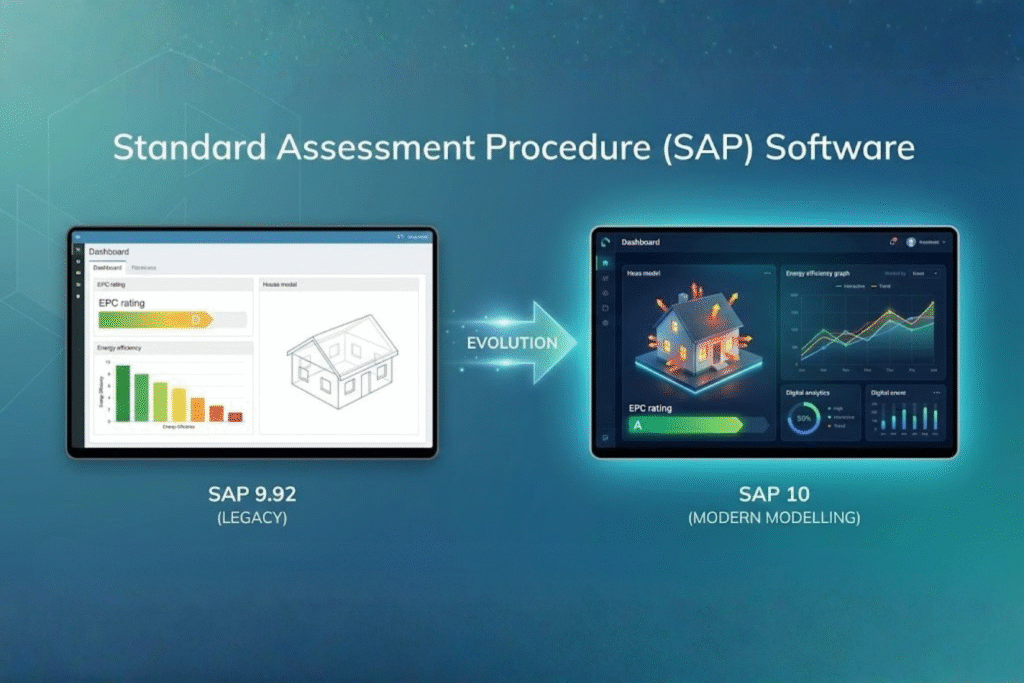
The Complete Guide to Standard Assessment Procedure Software: Understanding SAP 10 & 9.92 Solutions

Energy efficiency has become a cornerstone of modern construction and property management. At the heart of this revolution lies the Standard Assessment Procedure software, a critical tool that helps professionals evaluate and improve the energy performance of residential properties across the United Kingdom. This comprehensive guide explores everything you need to know about SAP 10 and 9.92 software, from fundamental concepts to practical applications. What is Standard Assessment Procedure Software? The Standard Assessment Procedure software represents the UK government’s recommended methodology for assessing and comparing the energy performance of dwellings. This sophisticated system calculates a property’s energy efficiency rating, which directly influences Energy Performance Certificates (EPCs), building regulations compliance, and various government incentive schemes. SAP 10 software is the latest iteration of this assessment methodology, while SAP 9.92 software remains widely used for existing properties and specific regulatory requirements. Both versions of standard assessment procedure software provide detailed calculations that account for numerous factors, including insulation levels, heating systems, ventilation, lighting, and renewable energy installations. The Evolution from SAP 9.92 to SAP 10 Understanding the progression from SAP 9.92 software to SAP 10 software is essential for energy assessors and construction professionals. The transition represents a significant update in how we calculate and understand building energy performance. SAP 9.92 software served the industry well for several years, providing reliable assessments based on the knowledge and standards of its time. However, as building technologies advanced and our understanding of energy efficiency deepened, the need for a more sophisticated approach became apparent. SAP 10 software introduces several improvements over its predecessor. The updated standard assessment procedure software incorporates more accurate calculations for heat pumps, better accounts for thermal bridging, and includes refined methodologies for assessing renewable technologies. These enhancements ensure that SAP 10 and 9.92 software users can provide more precise energy ratings that reflect real-world performance. Key Features of Modern SAP Software Solutions When selecting standard assessment procedure software, professionals should look for several critical features that streamline the assessment process and ensure accuracy. Comprehensive Data Input Capabilities Quality SAP 10 software and SAP 9.92 software must accommodate extensive property data. From basic dimensions and construction details to complex renewable energy system specifications, the standard assessment procedure software needs to capture every element that influences energy performance. Modern solutions feature intuitive interfaces that guide assessors through the data collection process, reducing errors and omissions. Regulatory Compliance and Updates The building regulations landscape constantly evolves, and your SAP 10 and 9.92 software must keep pace. Leading standard assessment procedure software providers regularly update their platforms to reflect changes in building standards, calculation methodologies, and compliance requirements. This ensures that assessments remain valid and accepted by regulatory bodies. Integration with Other Systems Professional-grade SAP 10 software often integrates with Computer-Aided Design (CAD) systems, building information modeling (BIM) platforms, and EPC production tools. This connectivity eliminates duplicate data entry and creates seamless workflows from initial design through final certification. Applications of SAP 10 & 9.92 Software The applications of standard assessment procedure software extend across multiple sectors of the construction and property industries. New Build Developments For new construction projects, SAP 10 software serves as an essential design tool. Developers and architects use standard assessment procedure software during the planning phase to model different design options and ensure compliance with building regulations before construction begins. By running multiple scenarios through SAP 10 and 9.92 software, design teams can optimize energy performance while managing construction costs. Retrofit and Renovation Projects When upgrading existing properties, SAP 9.92 software and SAP 10 software help identify the most cost-effective improvement measures. Energy assessors use standard assessment procedure software to compare baseline performance against potential upgrade scenarios, providing property owners with clear evidence of anticipated energy savings and payback periods. Social Housing and Local Authority Projects Social housing providers rely heavily on SAP 10 software to manage their property portfolios efficiently. The standard assessment procedure software enables these organizations to prioritize improvement programs, target properties with the poorest performance, and demonstrate compliance with energy efficiency standards. Commercial Energy Assessment Services Professional energy assessors build their businesses around standard assessment procedure software. Whether conducting EPCs for property sales, providing pre-construction assessments, or certifying completed developments, reliable SAP 10 and 9.92 software forms the foundation of their service offerings. Benefits of Using Professional SAP Software Investing in quality SAP 10 software or SAP 9.92 software delivers numerous advantages for construction professionals and property owners alike. Accuracy and Reliability Professional standard assessment procedure software implements the complex calculation methodologies exactly as specified in the official SAP documentation. This precision ensures that assessments are accepted by building control, mortgage lenders, and other stakeholders without question. Time Efficiency Modern SAP 10 and 9.92 software dramatically reduces the time required to complete assessments. Automated calculations, pre-populated databases of construction materials and heating systems, and intelligent data validation features allow assessors to complete projects faster while maintaining accuracy. Cost Savings Through Optimization By using standard assessment procedure software during the design phase, developers can identify cost-effective ways to achieve required energy ratings. The ability to model different scenarios with SAP 10 software prevents over-specification of expensive measures when simpler solutions might suffice. Enhanced Professional Credibility Energy assessors using recognized SAP 9.92 software or SAP 10 software demonstrate professional competence and commitment to quality. This credibility helps build client trust and can differentiate services in a competitive marketplace. Choosing the Right Standard Assessment Procedure Software Selecting appropriate standard assessment procedure software requires careful consideration of several factors. Software Version Requirements Understanding when to use SAP 10 software versus SAP 9.92 software is crucial. Current building regulations typically require SAP 10 software for new assessments, though SAP 9.92 software may still be appropriate for certain legacy projects or specific compliance scenarios. User Interface and Learning Curve The usability of standard assessment procedure software significantly impacts productivity. Solutions with intuitive interfaces, helpful guidance, and comprehensive documentation enable assessors to work more efficiently, even when dealing with complex properties. Support and Training Quality SAP 10 and 9.92 software providers

Uncategorized

Smart Homes Using AI in India: Opening Up New Possibilities

The landscape of Indian households is undergoing a dramatic transformation. Smart homes using AI in India are opening up new possibilities that were once confined to the realm of science fiction. From voice-activated assistants to intelligent security systems, artificial intelligence is reshaping how millions of Indians interact with their living spaces, bringing unprecedented convenience, efficiency, and innovation to everyday life. The Dawn of Intelligent Living Indian tech companies and startups are at the forefront of this revolution. Recognizing the unique challenges and preferences of Indian consumers, they’re developing solutions tailored to local conditions. From dealing with frequent power fluctuations to accommodating large joint families, smart homes using AI in India are opening up new possibilities that address distinctly Indian needs. India’s rapid technological adoption has created fertile ground for smart home innovation. Smart homes using AI in India opening up new possibilities is not just a trend but a revolution that’s making homes more responsive, energy-efficient, and secure. With the country’s growing middle class, increasing internet penetration, and falling technology costs, AI-powered home automation is becoming accessible to a broader demographic than ever before. The integration of artificial intelligence into home systems represents a significant leap from traditional automation. While earlier smart home solutions focused on remote control and scheduling, smart homes using AI in India are opening up new possibilities through learning algorithms that adapt to residents’ habits, preferences, and routines. These systems don’t just follow commands; they anticipate needs. Understanding the AI Revolution in Indian Homes At its core, the concept of smart homes using AI in India opening up new possibilities revolves around creating living spaces that think, learn, and respond. AI-powered systems use machine learning algorithms to analyze patterns in how residents use their homes. Over time, these systems become increasingly sophisticated, adjusting lighting based on time of day, optimizing air conditioning for comfort and efficiency, and even predicting when maintenance might be needed. Energy Efficiency: A Game-Changing Benefit One of the most compelling advantages of smart homes using AI in India opening up new possibilities is energy management. India faces significant energy challenges, with growing demand and concerns about sustainability. AI-powered home systems can reduce electricity consumption by 20 to 30 percent through intelligent monitoring and optimization. These systems learn when rooms are occupied, adjust lighting and climate control accordingly, and even communicate with the power grid to shift energy-intensive tasks to off-peak hours. For Indian households grappling with rising electricity costs, smart homes using AI in India are opening up new possibilities for substantial savings while contributing to environmental conservation. Smart thermostats, in particular, have gained traction in Indian metros. They learn temperature preferences for different times of day and weather conditions, ensuring comfort while minimizing wasteful energy use. This intelligent approach to climate control exemplifies how smart homes using AI in India opening up new possibilities extends beyond mere convenience to deliver tangible economic and environmental benefits. Security and Safety Redefined Home security has always been a paramount concern for Indian families, and smart homes using AI in India are opening up new possibilities in this critical domain. AI-powered security systems go far beyond traditional alarms and CCTV cameras. They use facial recognition to identify family members, detect unusual activity patterns, and even distinguish between potential threats and harmless events like a stray animal in the yard. Modern AI security systems can send real-time alerts to homeowners’ smartphones, allowing them to monitor their properties from anywhere in the world. Some systems integrate with local security services, automatically notifying them in case of emergencies. This level of intelligent protection demonstrates how smart homes using AI in India opening up new possibilities is transforming peace of mind for families across the country. Fire and gas leak detection systems powered by AI add another layer of safety. These systems don’t just sound alarms; they can automatically shut off gas supplies, activate ventilation systems, and even contact emergency services, all while notifying the homeowner. Such proactive safety measures show how smart homes using AI in India are opening up new possibilities for protecting what matters most. Voice Control and Natural Interaction The proliferation of voice assistants in India has been remarkable. Devices supporting Hindi, Tamil, Bengali, and other regional languages are making smart homes using AI in India opening up new possibilities for millions who might not be comfortable with English interfaces. Voice control has emerged as the most intuitive way to interact with smart home systems, especially for elderly family members and children. From turning on lights to adjusting room temperature, playing music, or checking security cameras, voice commands make home automation accessible to everyone. The ability to converse in one’s native language makes smart homes using AI in India opening up new possibilities truly inclusive, bridging the technology gap across generations and education levels. Healthcare and Wellness Applications Perhaps one of the most promising aspects of smart homes using AI in India opening up new possibilities lies in healthcare and wellness monitoring. AI-enabled devices can track vital signs, medication schedules, and sleep patterns, particularly valuable for elderly residents or those with chronic conditions. Smart bathrooms with AI-powered health monitoring, intelligent air purifiers that adjust to pollution levels, and kitchen systems that suggest healthy meal options based on dietary requirements all exemplify how smart homes using AI in India are opening up new possibilities for preventive healthcare and improved quality of life. Entertainment and Lifestyle Enhancement Entertainment systems have become significantly more sophisticated with AI integration. Smart homes using AI in India opening up new possibilities includes personalized content recommendations, automatic adjustment of audio-visual settings based on content type, and even mood-based lighting that enhances the viewing experience. AI-powered home systems can create ambiance for different occasions like romantic dinners, movie nights, or festive celebrations at the touch of a button or a voice command. This seamless integration of technology into lifestyle demonstrates how smart homes using AI in India are opening up new possibilities for enhanced living experiences. The Role of Internet of Things

Uncategorized

The Ultimate Guide to IoT Projects with Source Code: Building Smart Solutions from Scratch

The Internet of Things has revolutionized how we interact with technology, transforming everyday objects into intelligent, connected devices. For developers, engineers, and hobbyists looking to enter this exciting field, IoT projects with source code provide the perfect learning pathway. This comprehensive guide explores various IoT projects with source code that you can build, learn from, and customize to create your own innovative solutions. Understanding the Importance of IoT Projects with Source Code When embarking on your journey into the Internet of Things, having access to IoT projects with source code is invaluable. These projects serve as practical blueprints that demonstrate real-world implementations, helping you understand how different components work together. By studying IoT projects with source code, you can accelerate your learning curve, avoid common pitfalls, and build a strong foundation in IoT development. The beauty of IoT projects with source code lies in their educational value. Unlike theoretical tutorials, these projects provide hands-on experience with actual hardware and software integration. Whether you’re a student, a professional developer, or an electronics enthusiast, working with IoT projects with source code allows you to see the complete picture of how sensors, microcontrollers, communication protocols, and cloud platforms interconnect. Essential Components for IoT Projects with Source Code Before diving into specific IoT projects with source code, it’s important to understand the fundamental building blocks. Most IoT projects with source code utilize microcontrollers like Arduino, ESP8266, ESP32, or Raspberry Pi as their core processing units. These platforms are popular in IoT projects with source code because they’re affordable, well-documented, and have extensive community support. Sensors form another critical component of IoT projects with source code. Temperature and humidity sensors (DHT11, DHT22), motion sensors (PIR), ultrasonic distance sensors, and gas sensors are commonly featured in IoT projects with source code. Communication modules like WiFi, Bluetooth, LoRa, and GSM enable these projects to connect to the internet or other devices, which is the essence of what makes IoT projects with source code truly “Internet of Things.” Home Automation: Popular IoT Projects with Source Code Home automation represents one of the most sought-after categories of IoT projects with source code. A smart home system that controls lights, fans, and appliances via a smartphone app is among the most popular IoT projects with source code for beginners. These IoT projects with source code typically use an ESP8266 or ESP32 microcontroller connected to relay modules that switch household appliances on and off. The source code for these IoT projects with source code usually includes WiFi connectivity setup, web server implementation, and GPIO control logic. Many IoT projects with source code in this category integrate with platforms like Blynk, MQTT brokers, or custom mobile applications. By examining these IoT projects with source code, you’ll learn how to create intuitive user interfaces and implement secure remote control mechanisms. Smart doorbell systems are another fascinating example of IoT projects with source code in home automation. These IoT projects with source code combine video streaming, motion detection, and push notifications to create comprehensive security solutions. The source code demonstrates integration with cloud services, real-time video processing, and user authentication systems. Environmental Monitoring: Essential IoT Projects with Source Code Environmental monitoring IoT projects with source code address growing concerns about air quality, weather patterns, and climate change. A weather station that measures temperature, humidity, pressure, and rainfall is a classic example of IoT projects with source code that provide practical value. These IoT projects with source code collect sensor data, process it using microcontrollers, and transmit it to cloud platforms for storage and visualization. Air quality monitoring systems represent more advanced IoT projects with source code that detect harmful gases, particulate matter, and volatile organic compounds. The source code in these IoT projects with source code includes calibration algorithms, data averaging techniques, and threshold-based alert systems. By studying these IoT projects with source code, you’ll understand how to work with analog sensors and implement sophisticated data processing pipelines. Soil moisture monitoring systems for agriculture are practical IoT projects with source code that help farmers optimize irrigation. These IoT projects with source code use capacitive or resistive soil moisture sensors connected to microcontrollers that trigger water pumps automatically. The source code demonstrates analog-to-digital conversion, decision-making logic, and actuator control, which are fundamental concepts in many IoT projects with source code. Health and Wearables: Innovative IoT Projects with Source Code Healthcare applications have spawned numerous IoT projects with source code that monitor vital signs and track fitness metrics. A heart rate monitoring system using a pulse sensor is one of the most educational IoT projects with source code in this category. These IoT projects with source code teach signal processing, filtering techniques, and real-time data visualization. Fall detection systems for elderly care are critical IoT projects with source code that combine accelerometers, gyroscopes, and machine learning algorithms. The source code in these IoT projects with source code demonstrates how to detect sudden movements, analyze motion patterns, and trigger emergency alerts. Working with such IoT projects with source code provides insights into embedded machine learning and edge computing. Medication reminder systems are practical IoT projects with source code that use RTC (Real-Time Clock) modules, buzzers, and LED indicators. These IoT projects with source code showcase scheduling algorithms, alarm management, and user interaction design. The simplicity of these IoT projects with source code makes them excellent starting points for beginners. Industrial IoT: Advanced IoT Projects with Source Code Industrial applications have driven demand for sophisticated IoT projects with source code that monitor machinery, track assets, and optimize processes. Predictive maintenance systems are among the most valuable IoT projects with source code in manufacturing. These IoT projects with source code use vibration sensors, temperature monitors, and current sensors to detect anomalies in equipment operation. The source code for industrial IoT projects with source code often includes edge computing logic that performs initial data analysis before transmitting to the cloud. This approach, demonstrated in many IoT projects with source code, reduces bandwidth requirements and enables faster response times. By

Uncategorized

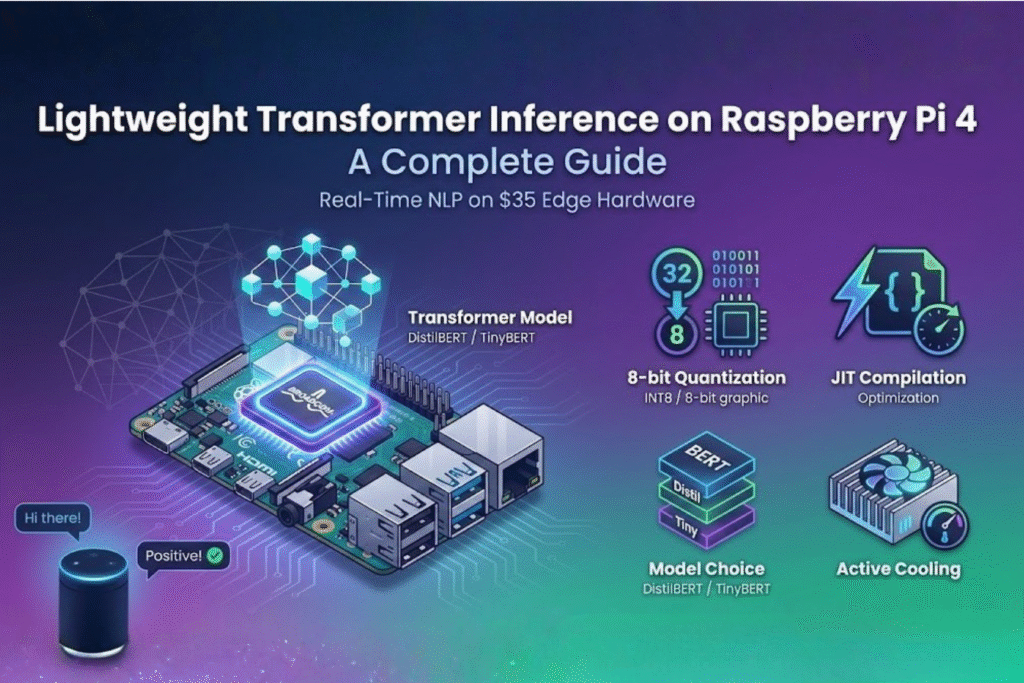
Lightweight Transformer Inference on Raspberry Pi 4

The evolution of edge computing has brought sophisticated AI capabilities to affordable hardware. Among the most exciting developments is lightweight transformer inference on Raspberry Pi 4, which enables natural language processing directly on a $35-75 device. This guide explores how to achieve real-time performance with transformer models on constrained hardware. Understanding the Hardware Challenge The Raspberry Pi 4, available in 2GB, 4GB, and 8GB RAM variants, provides ARM Cortex-A72 cores capable of handling optimized neural networks. However, transformer inference on Raspberry Pi 4 presents unique challenges. The ARM-based architecture with four cores running at 1.5 GHz excels at power efficiency rather than raw computational throughput. For lightweight transformer inference on the Raspberry Pi 4 tasks, memory bandwidth becomes the primary bottleneck. The LPDDR4 RAM operates at lower speeds than desktop counterparts, making memory-intensive operations like attention mechanisms particularly challenging. This is why optimization techniques are essential for successful transformer inference on Raspberry Pi 4 implementations. The lack of dedicated neural processing units means all computation happens on the CPU. However, ARM’s NEON SIMD instructions provide vectorization capabilities that frameworks can exploit to accelerate lightweight transformer inference on Raspberry Pi 4 operations. Essential Setup for Success Setting up your system correctly makes a dramatic difference in transformer inference on the Raspberry Pi 4 performance. First, install a 64-bit operating system. The aarch64 architecture provides access to optimized libraries that can double performance compared to 32-bit systems for lightweight transformer inference on Raspberry Pi 4 applications. Thermal management cannot be overlooked when running transformer inference on the Raspberry Pi 4. Sustained inference workloads generate significant heat. Without adequate cooling, the Pi 4 will throttle performance, reducing your model’s speed by 20-40%. Heat sinks and active cooling fans are recommended for any serious lightweight transformer inference on Raspberry Pi 4 deployment. Configure your boot settings to allocate appropriate GPU memory if you’re combining vision tasks with language processing. While the Pi’s GPU won’t accelerate transformer computations directly, proper memory allocation ensures system stability during transformer inference on Raspberry Pi 4 operations. Power supply quality matters more than many developers realize. Insufficient power causes voltage drops under load, leading to system instability during intensive lightweight transformer inference on the Raspberry Pi 4 operations. Use a quality 5V 3A USB-C power supply for reliable performance. Framework Selection Choosing the right deep learning framework significantly impacts lightweight transformer inference on Raspberry Pi 4 performance. PyTorch provides excellent ARM support with the qnnpack backend, specifically designed for quantized neural networks on mobile and embedded devices. The framework can be installed via pip and works seamlessly on 64-bit Raspberry Pi OS. TensorFlow Lite offers another excellent option with comprehensive ARM optimizations and smaller deployment footprints ideal for transformer inference on Raspberry Pi 4 scenarios. Its delegate system allows hardware-specific accelerations that improve performance. ONNX Runtime has emerged as a compelling choice for transformer inference on the Raspberry Pi 4 due to its aggressive graph optimizations and broad model format support. It can automatically apply operator fusion, constant folding, and layout transformations that dramatically improve performance for lightweight transformer inference on the Raspberry Pi 4. Model Architecture Selection Not all transformer architectures are equally suited for transformer inference on Raspberry Pi 4. Traditional BERT models with 110M parameters prove too large for comfortable real-time inference. This is where distilled variants become essential for lightweight transformer inference on Raspberry Pi 4 applications. DistilBERT reduces the original BERT’s size by 40% while retaining 97% of its language understanding capabilities. This makes it an excellent starting point for transformer inference on the Raspberry Pi 4. With 66M parameters, it strikes a balance between capability and efficiency, making it ideal for sentiment analysis, text classification, and question answering tasks. TinyBERT pushes compression even further, achieving 7.5x smaller size through aggressive knowledge distillation. For resource-constrained lightweight transformer inference on Raspberry Pi 4 scenarios, TinyBERT delivers impressive results with only 14.5M parameters while maintaining strong performance on downstream tasks. MobileBERT, designed specifically for mobile and edge devices, employs bottleneck structures and inverted-bottleneck attention mechanisms. Its architecture is optimized for the exact scenarios encountered in transformer inference on Raspberry Pi 4 deployments, providing excellent latency-accuracy trade-offs. ALBERT (A Lite BERT) uses parameter sharing across layers to reduce model size significantly. This makes it another strong candidate for lightweight transformer inference on the Raspberry Pi 4, especially when you need larger model capacity without proportional memory increases. Quantization: The Performance Multiplier Quantization is the single most impactful optimization for lightweight transformer inference on the Raspberry Pi 4. Converting 32-bit floating-point weights to 8-bit integers reduces model size by 4x and dramatically accelerates computation through INT8 arithmetic units available in ARM processors. For transformer inference on Raspberry Pi 4, dynamic quantization offers the best trade-off. Weights are stored as INT8, while activations are computed in floating-point and dynamically quantized. This approach maintains accuracy while achieving 2-4x speedups for lightweight transformer inference on the Raspberry Pi 4. Post-training quantization requires no retraining, making it ideal for quick transformer inference on Raspberry Pi 4 deployments. However, quantization-aware training yields even better results if you’re training custom models specifically for lightweight transformer inference on the Raspberry Pi 4 applications. The qnnpack backend, specifically designed for ARM processors, enables these quantization benefits. Activating qnnpack is essential for achieving optimal performance in transformer inference on the Raspberry Pi 4 scenarios. JIT Compilation Benefits Just-In-Time compilation transforms Python code into optimized intermediate representations that execute faster. For transformer inference on the Raspberry Pi 4, JIT can provide 1.5-2x speedups by eliminating Python interpreter overhead and enabling operation fusion. Script mode in PyTorch allows the entire model to be compiled ahead of time, which can increase lightweight transformer inference on Raspberry Pi 4 throughput from 20 frames per second to 30 fps by fusing operations and optimizing execution graphs. When implementing transformer inference on Raspberry Pi 4 with JIT, test thoroughly. Some dynamic Python behaviors don’t translate well to scripted code, potentially causing runtime errors in your lightweight transformer inference on the Raspberry Pi

Uncategorized

Top 10 Trending Industrial IoT Projects for 2025 with Source Code: A Complete Guide to Smart Manufacturing

The industrial landscape is undergoing a massive transformation, and at the heart of this revolution lies the Top 10 Trending Industrial IoT Projects for 2025 with Source Code. These projects aren’t just theoretical concepts; they’re practical, implementable solutions that are reshaping how factories, warehouses, and manufacturing facilities operate in real time. Understanding the Industrial IoT Revolution Before diving into the Top 10 Trending Industrial IoT Projects for 2025 with Source Code, it’s essential to understand why Industrial IoT has become the cornerstone of modern manufacturing. Unlike consumer IoT devices that focus on convenience, Industrial IoT (IIoT) systems are designed for durability, reliability, and precision. They connect machines, sensors, cloud platforms, and analytics engines to create intelligent ecosystems that optimize efficiency, enhance safety, and enable data-driven decision making. The Top 10 Trending Industrial IoT Projects for 2025 with Source Code represent the cutting edge of this technology, offering ready to implement solutions that address real world industrial challenges. From predictive maintenance to energy optimization, these projects demonstrate how connected intelligence transforms operational challenges into competitive advantages. Why These Projects Matter in 2025 As we navigate through 2025, the demand for smart manufacturing solutions has reached unprecedented levels. The Top 10 Trending Industrial IoT Projects for 2025 with Source Code have been carefully curated to address the most pressing needs of modern industries. These projects leverage advanced technologies including edge AI, machine learning, cloud computing, and real time analytics to deliver measurable results. What makes the Top 10 Trending Industrial IoT Projects for 2025 with Source Code particularly valuable is their accessibility. Each project comes with complete source code, detailed documentation, and step by step implementation guides, making it possible for engineers and developers at all skill levels to deploy these solutions in their facilities. Project Number 1: Real Time Structural Health Monitoring System The first entry in our Top 10 Trending Industrial IoT Projects for 2025 with Source Code tackles one of the most critical aspects of industrial safety: structural integrity monitoring. This sophisticated system employs precision sensors, including strain gauges and vibration detectors, to continuously assess the health of critical infrastructure such as bridges, factory complexes, and industrial sheds. The beauty of this project lies in its comprehensive approach. Using ESP32 microcontrollers as edge devices, the system captures real time data from strategically placed sensors. These sensors measure crack propagation, abnormal vibrations, and dynamic load stress with remarkable accuracy. The HX711 amplifier ensures that even the slightest strain measurements are captured with precision. Data flows seamlessly from the edge devices to AWS IoT Core using the lightweight MQTT protocol. Once in the cloud, AWS services process the information, compare it against predefined thresholds, and trigger immediate SMS or email alerts when anomalies are detected. Engineers can monitor everything through an intuitive Grafana dashboard that displays real time graphs, historical trends, and status indicators. This project demonstrates why it’s included in the Top 10 Trending Industrial IoT Projects for 2025 with Source Code because it transforms reactive maintenance into proactive, data driven strategy, potentially saving millions in repair costs and preventing catastrophic failures. The Technology Stack Behind These Projects When exploring the Top 10 Trending Industrial IoT Projects for 2025 with Source Code, you’ll notice common technological threads that run through each implementation. These projects leverage powerful microcontrollers like the ESP32, which offers Wi-Fi connectivity and robust processing capabilities at an affordable price point. Cloud platforms, particularly AWS IoT Core, serve as the backbone for data ingestion, processing, and storage. The MQTT protocol has emerged as the standard for IoT communication due to its lightweight nature and reliability. Visualization tools like Grafana provide the critical human interface, transforming raw data streams into actionable insights. Project Number 2: Industrial Fire Detection with Edge AI The second project in our Top 10 Trending Industrial IoT Projects for 2025 with Source Code addresses another critical safety concern: fire detection. Unlike traditional smoke detectors, this system employs edge AI to identify fires through visual recognition, detecting flames and smoke patterns before conventional sensors would trigger. By deploying cameras with onboard processing capabilities, this system analyzes video feeds in real time without sending massive data streams to the cloud. The edge AI algorithms can distinguish between actual fires and false positives like steam or dust, dramatically reducing false alarms while ensuring rapid response to genuine emergencies. Project Number 3: Predictive Maintenance for CNC Machines Predictive maintenance represents one of the most valuable applications in the Top 10 Trending Industrial IoT Projects for 2025 with Source Code. This project monitors CNC machines in real time, analyzing vibration patterns, temperature fluctuations, and acoustic signatures to predict component failures before they occur. By implementing machine learning algorithms at the edge, the system learns normal operational patterns and immediately flags anomalies. This proactive approach reduces unplanned downtime by up to 70% and extends machine lifespan significantly. The source code includes trained models and data preprocessing pipelines that can be adapted to various machine types and operating conditions. Project Number 4: Industrial Tank Level Monitoring System Tank level monitoring might seem straightforward, but when you examine this entry in the Top 10 Trending Industrial IoT Projects for 2025 with Source Code, you’ll discover sophisticated features that go far beyond simple measurement. This system tracks liquid levels across multiple tanks simultaneously, calculates consumption rates, predicts refill schedules, and optimizes inventory management. Using ultrasonic or pressure sensors connected to IoT enabled microcontrollers, the system provides real time updates to cloud dashboards. Supply chain teams receive automated notifications when tanks approach critical levels, ensuring just in time refilling and eliminating both stockouts and overfilling incidents. The integration capabilities of this project allow it to connect with enterprise resource planning systems, automatically generating purchase orders when inventory falls below predetermined thresholds. This seamless automation reduces manual oversight requirements and minimizes human error in inventory management. Project Number 5: Conveyor Belt Health Monitoring with Machine Learning Conveyor systems are the arteries of modern manufacturing facilities, and their failure can halt entire production lines. This project

Machine Learning Frameworks
Uncategorized

Top 10 Machine Learning Frameworks to Use in 2025

Introduction: The Turning Point of Machine Learning In the winter of 2024, I visited a small artificial intelligence research lab hidden inside a quiet technology park in Bangalore. The team was working on a weather forecasting project for a remote Himalayan valley. They had limited computing resources and a very small budget. What they did have was ambition. During one meeting, the lead engineer looked around the room and said, “If we choose the wrong framework today, we will spend the next year fixing what we could have avoided.” That sentence stayed with me. That experience taught me that the right machine learning framework can make or break a project. As we step into 2025, the landscape of artificial intelligence is evolving rapidly. Frameworks are not just tools anymore; they are ecosystems that define the speed, quality, and scalability of innovation. So let us explore the Top 10 Machine Learning Frameworks to Use in 2025, understand their power, their purpose, and the kind of projects they are shaping across the world. Why Frameworks Matter in 2025 Before we dive into the actual list of the top 10 machine learning frameworks to use in 2025, it is important to understand why this choice is so significant. A machine learning framework is the foundation upon which models are built, trained, tested, and deployed. Choosing the right one determines how fast your model learns, how easily you can experiment, and how smoothly you can take your model from research to real-world application. Let us understand the pillars that make these frameworks crucial in 2025. When we talk about the top 10 machine learning frameworks to use in 2025, these are the standards they must meet. Top 10 Machine Learning Frameworks 1. TensorFlow with Keras TensorFlow remains one of the strongest contenders in any list of the top 10 machine learning frameworks to use in 2025. It is backed by Google and trusted by industries across the world. During the Himalayan valley project, one of the biggest challenges was deploying models to mobile devices with weak connectivity. TensorFlow Lite allowed the team to compress and optimize models that ran perfectly on edge sensors. That moment made everyone realize why TensorFlow remains a giant even in 2025. Why it matters in 2025: TensorFlow’s maturity ensures it remains one of the most reliable machine learning frameworks in 2025 for both research and production. 2. PyTorch If TensorFlow is the corporate workhorse, PyTorch is the artist. It is flexible, expressive, and intuitive. It is loved by researchers and dominates academic papers and experimental projects. A team I once mentored built an audio recognition model in PyTorch. They loved how easy it was to experiment, debug, and visualize results. Within weeks they had something ready to demo. That level of creativity is what makes PyTorch shine. Why it dominates the 2025 landscape: PyTorch is not just part of the top 10 machine learning frameworks to use in 2025; for many innovators, it is number one. 3. JAX JAX is the rising star that combines the simplicity of NumPy with the power of automatic differentiation and just-in-time compilation. It is one of the most promising frameworks for high-performance computing and research. When I worked with a physics simulation team, we needed gradients of a complex numerical process. Only JAX made it elegant and efficient. We wrote the code once and ran it across GPUs effortlessly. Why JAX deserves a place in the 2025 list: JAX stands as one of the most innovative machine learning frameworks to use in 2025, built for people who want precision, speed, and control. 4. Hugging Face Transformers In 2025, language models and transformers rule artificial intelligence. The Hugging Face Transformers library has become a core ecosystem, not just a toolkit. It provides ready-made models for natural language processing, image recognition, audio understanding, and even generative AI. What makes it special is accessibility. A small startup can fine-tune a billion-parameter model in hours using Hugging Face. During a personal project on environmental text summarization, we used their trainer API and achieved incredible results without any complex setup. Why it is one of the top frameworks of 2025: Hugging Face is more than a library. It is a movement that defines the machine learning frameworks of 2025. 5. TensorFlow Lite and TensorFlow Extended TensorFlow Lite and TensorFlow Extended deserve a separate mention because they have become essential for deployment and monitoring. TensorFlow Lite brings machine learning to phones, IoT devices, and edge systems. TensorFlow Extended manages the entire production lifecycle from data validation to model serving. I saw this combination power an agricultural monitoring system that detected crop diseases in real time using small devices in Indian fields. It was affordable and reliable, proving why this framework remains vital in 2025. Why they belong to the top 10 list: The top 10 machine learning frameworks to use in 2025 must include TensorFlow Lite and TFX because they bring real products to life. 6. Apache MXNet MXNet is known for its scalability and multi-language support. Though quieter in recent years, it remains a dependable option, especially for enterprise systems that integrate with Java or Scala environments. In 2025, many businesses still use MXNet because of its distributed training capabilities. A fintech company I worked with trained massive fraud detection models across multiple GPUs using MXNet with remarkable stability. Why it stands out: MXNet remains one of the top 10 machine learning frameworks in 2025 for organizations that prioritize reliability over hype. 7. Deeplearning4j For companies whose entire architecture runs on Java, Deeplearning4j is a gift. It brings deep learning to the JVM world without needing Python bridges. I once collaborated with a banking client who had strict compliance rules that required Java for everything. We implemented Deeplearning4j and integrated neural models directly into their trading system. Why it continues to stay relevant in 2025: Deeplearning4j may not be trendy, but in the top 10 machine learning frameworks of 2025, it remains the professional’s choice for enterprise

Scroll to Top